26 April 1956 · Port Newark
Everything that had to change around the box
Malcom McLean's Ideal X sailed from Newark in April 1956, and the interesting part is the decade of cranes, yards and contracts that followed.
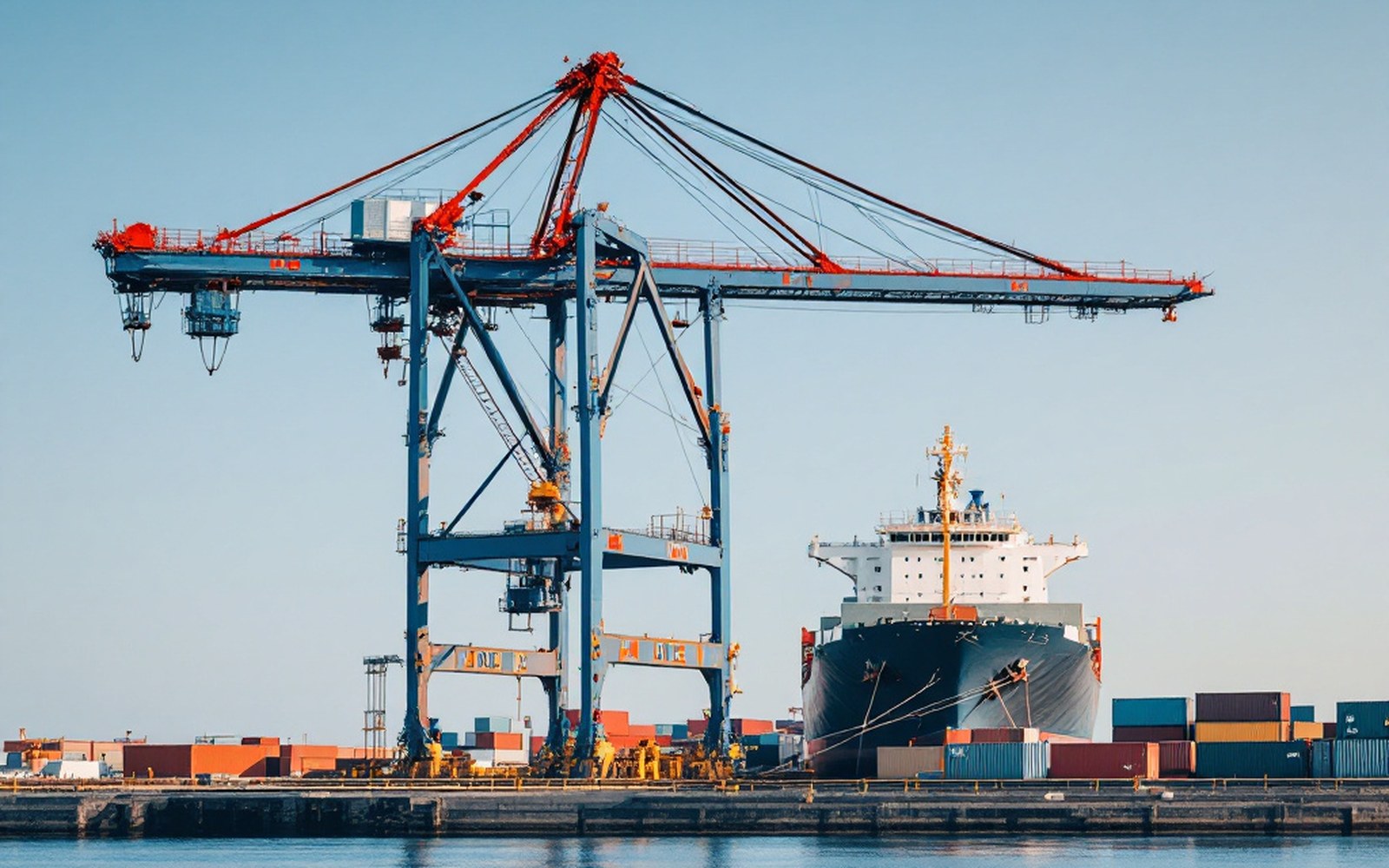
The boom carries out over the ship and the operator rides the trolley along it, working looking straight down.
Photograph
The water ran out before the shipyards did
A converted tanker left Newark with fifty-eight boxes on a deck laid over her tanks. Sixty-five years later a ship carried twenty-three thousand nine hundred and ninety-two of them. Nothing about that was limited by how large a hull can be welded.
The later hull fits neither set of Panama locks, and was never meant to. The constraint moved from the shipyard to the water.
Lengths overall as published by their owners; profiles schematic.
Section 2 of 4 · four pages
The crane that had to be invented
Cranes had to be invented, yards paved and planned by slot, ships rebuilt as cell guides rather than holds. And a generation of berths turned out to be in the wrong place, because there was no land behind them.
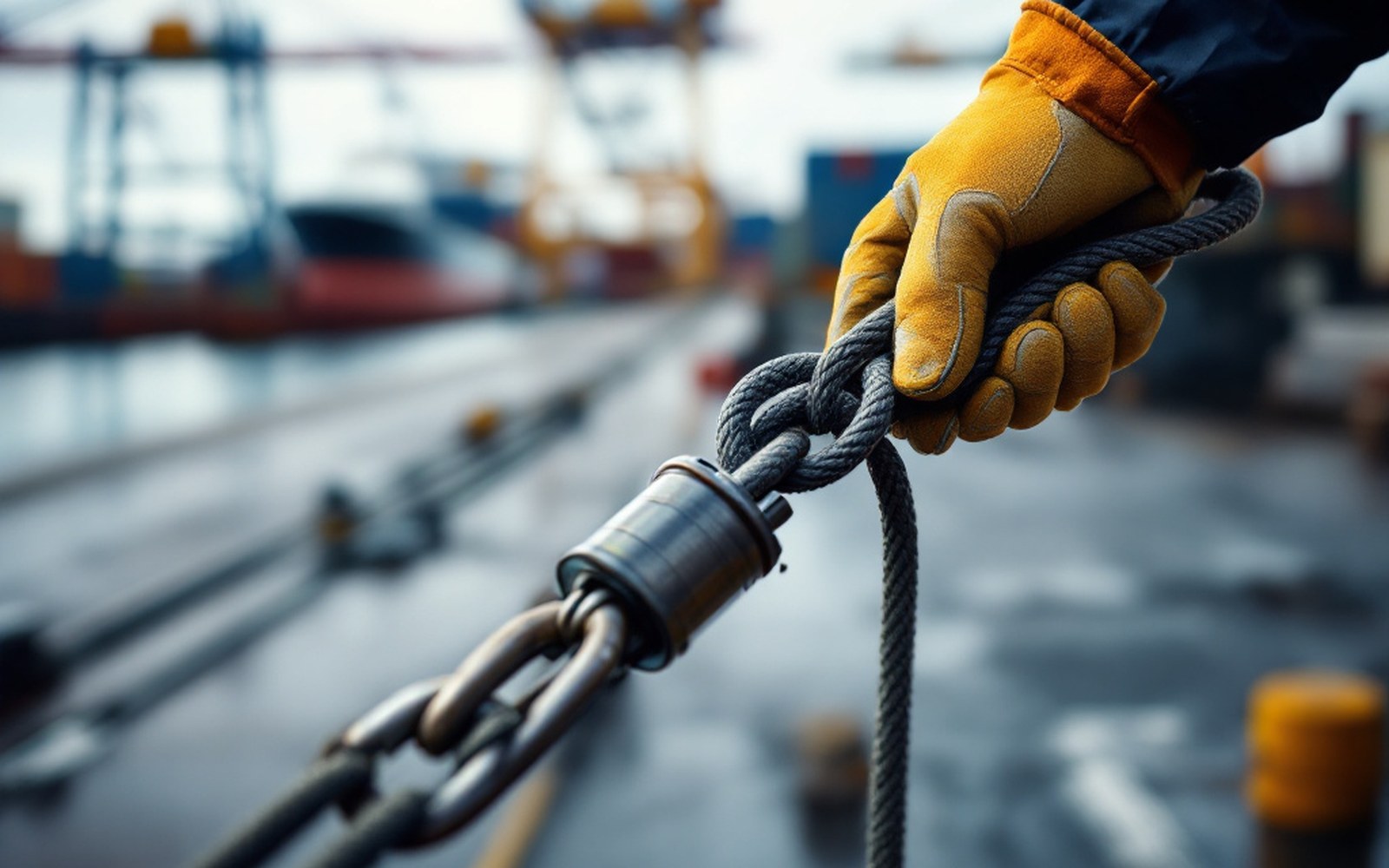
Above deck the stack is held by hand — a rod from the box’s upper casting to a deck fitting, tensioned with a turnbuckle.
The water ran out before the shipyards did
Suez has no locks and never has. Panama has had two sets since 26 June 2016. Malacca is shallow and crowded at the same time.
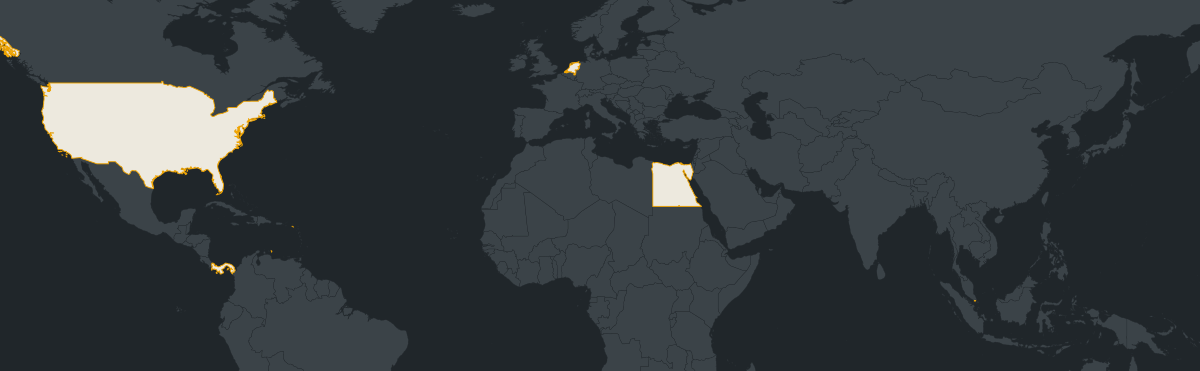
Five places the box had to fit through: the berth it left, the two canals that set its dimensions, the deep-water port built out into the sea, and the strait almost everything sailing between Asia and Europe passes.
Coastlines and pin positions from the supplied geometry. The connectors are straight lines between marked points; each figure is the great-circle distance, not a sailing distance.
A receipt, a contract of carriage, and a document of title. The last of those is why a container can be sold while it is still at sea.
The rest of it
Every page on the site is listed on one register.
Section 4
The water ran out before the shipyards did
Canals, channels and size.
Supported by
Founding support



Section partners




Reader support