Section 2 of 4 · 4 pages
The crane that had to be invented
A container terminal is a machine for moving one box at a time, very fast, in a known order. Four pages on the crane that had to be designed from nothing, the yard behind it, the berths that emptied because they had no land, and the two pieces of steel that hold a stack still in a swell.
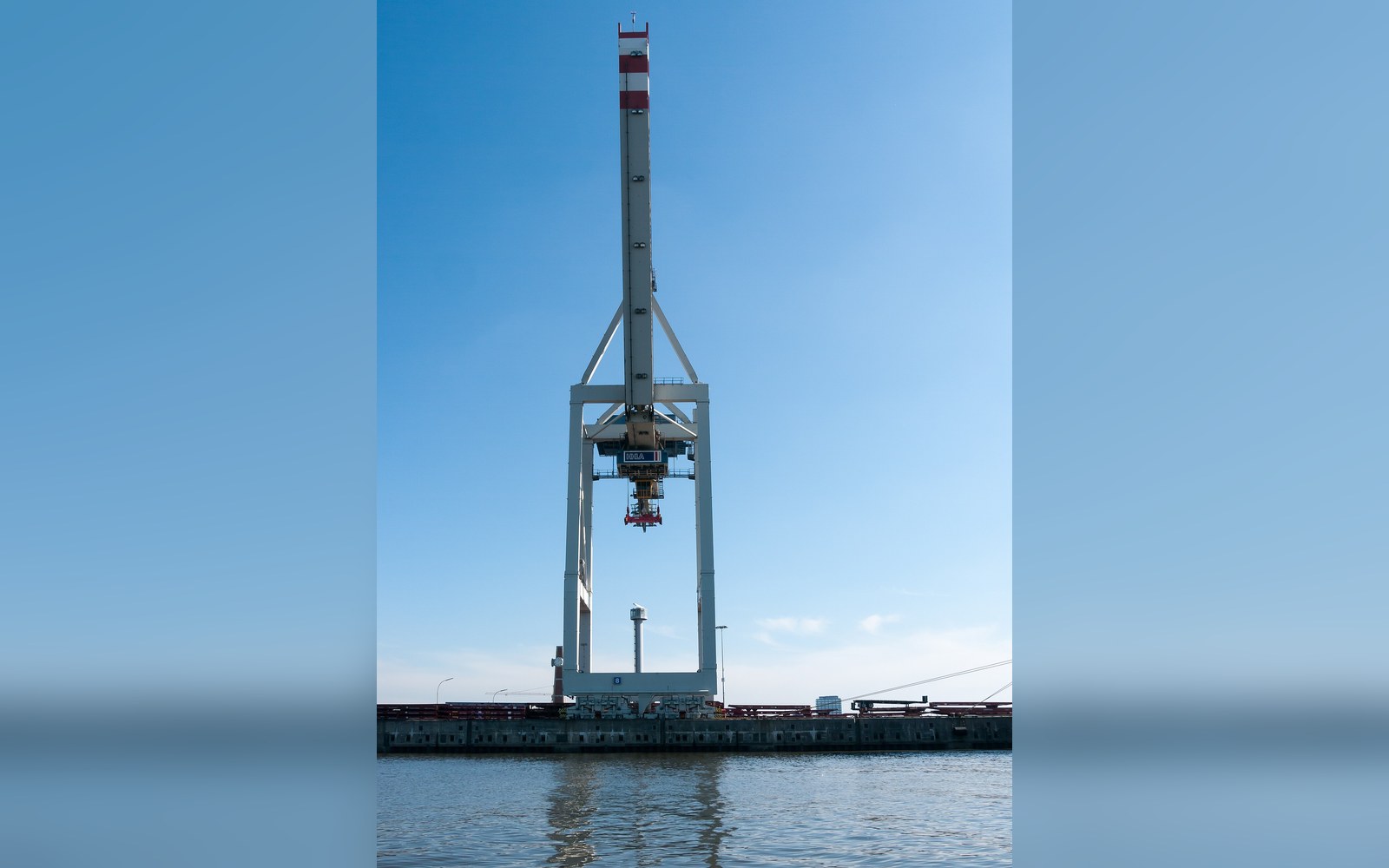
Outreach — how far the boom carries over the water — decides the widest ship the berth can work.
Photo: Am Kamerunkai, Crane, WPAhoi, Hamburg (P1080287) · Wikimedia Commons
The 4 pages in this section
- The crane that had to be inventedShip-to-shore gantries did not exist and had to be designed around the box, the ship's beam and the quay's bearing capacity.
- Elizabeth, and the piers that emptiedContainer terminals needed deep water and enormous flat land, which is why the traffic left the old finger piers.
- The yard, seen from heightA terminal is a storage problem: every box must be reachable in a known number of moves.
- Twistlock, lashing rod, and the hand that fits themSecuring a stack at sea is still manual work done at height in weather.
The other three sections