The same box, without opening it
Drayage, and the last thirty miles
The road leg between terminal and warehouse is short, expensive, and the point where everything tends to back up.
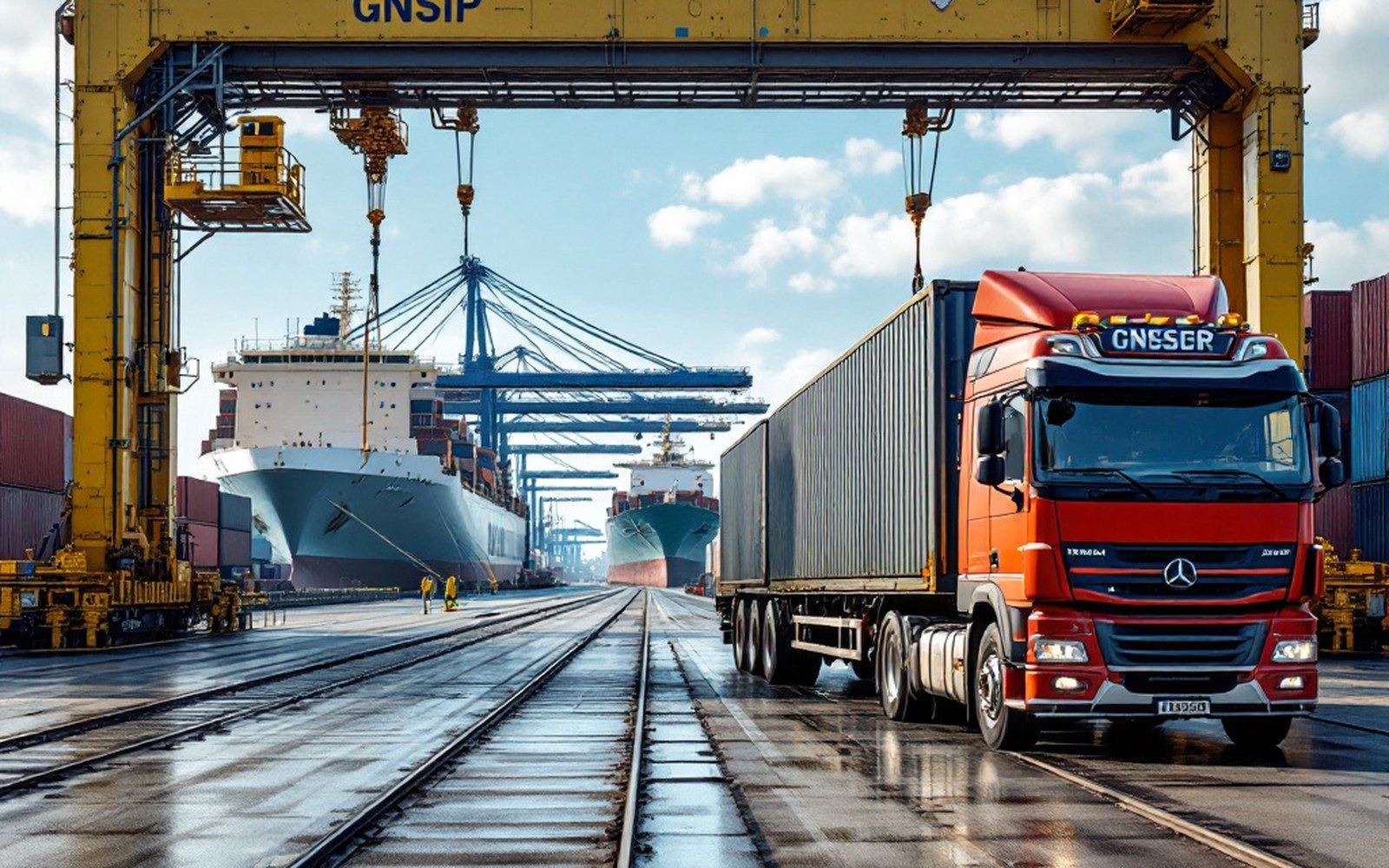
A box needs a chassis, a credentialled driver and an appointment. Any one of the three can stop it at the gate.
The leg nobody designed
Drayage — the truck move that carries a container between a marine terminal and its first inland destination — is the shortest segment in a container's journey and, per mile, among the costliest. A box may have crossed an ocean, transited the Strait of Malacca and discharged at a major port in under three weeks; the final thirty miles to a distribution warehouse can take longer to arrange than the sailing.
The reason is structural. Drayage operates in the zone where port gate systems, chassis pools, driver availability, warehouse receiving windows and road congestion all converge at once. Each is independently scheduled; none is synchronized with the others. A container released by the terminal still needs a chassis, a registered drayage driver with a port access credential, a booking at the warehouse dock, and clearance to move — and any one of these can be the constraint on any given day.
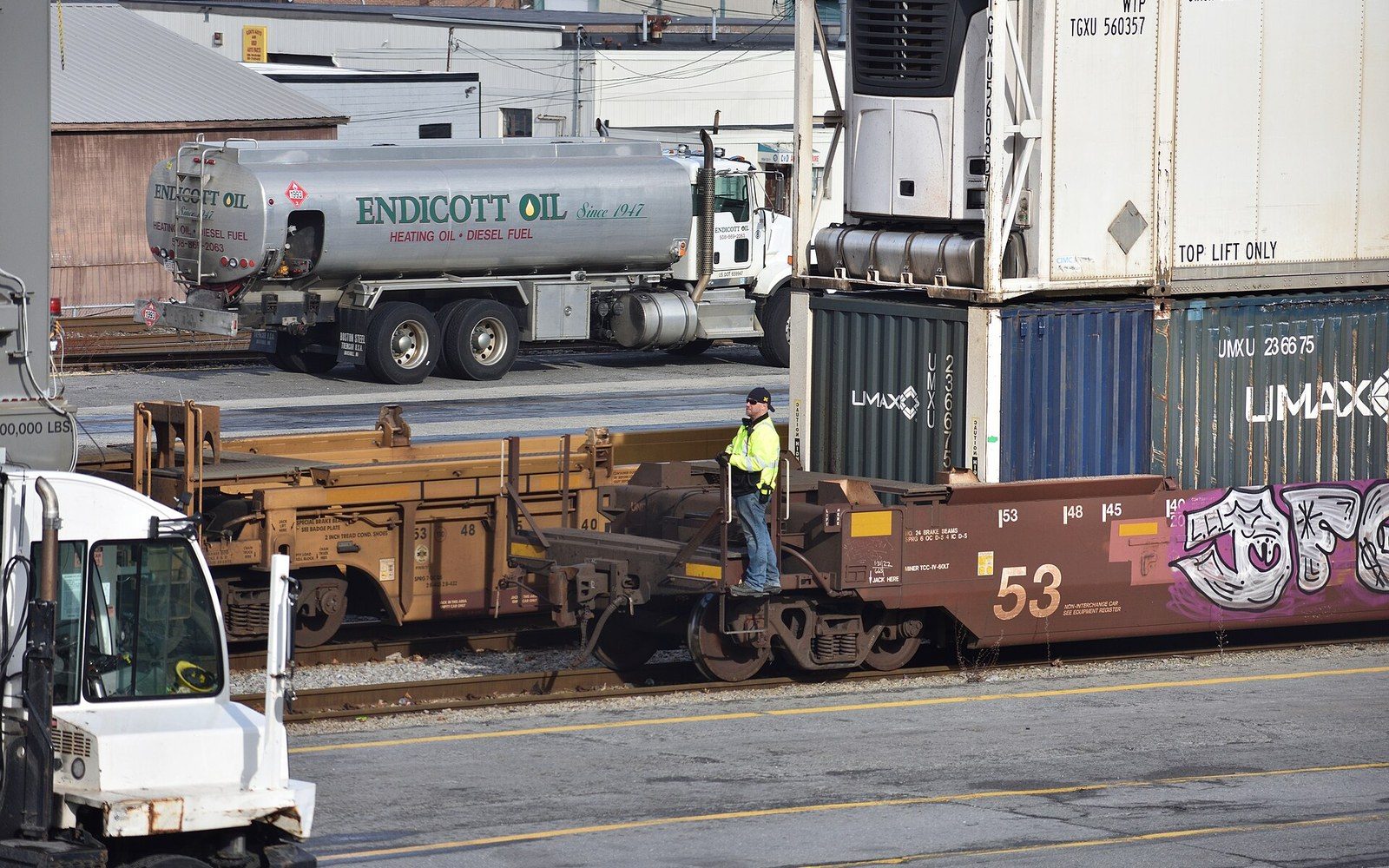
Two boxes to a well car, and eight feet of clearance under the lower one. That clearance is the whole reason double-stack works.
Photo: Conductor riding well car in Worcester MA · Wikimedia Commons
The chassis question is particularly sharp. In North American ports, chassis are frequently owned by leasing companies rather than carriers, and pooling arrangements vary by terminal. A driver arriving at the gate without a matched chassis turns around empty. The chassis pool model that became standard at major US ports emerged partly to reduce exactly this friction, but utilization mismatches persist.
Scale compounds everything. As ship size has grown — vessels carrying eighteen thousand TEU or more are now routine at major terminals — the gate throughput required to clear a single vessel has risen proportionally. The port of Newark-Elizabeth in New Jersey, one of the busiest on the US East Coast, processes hundreds of truck moves per vessel call. Road infrastructure around most terminals was not built for that volume.
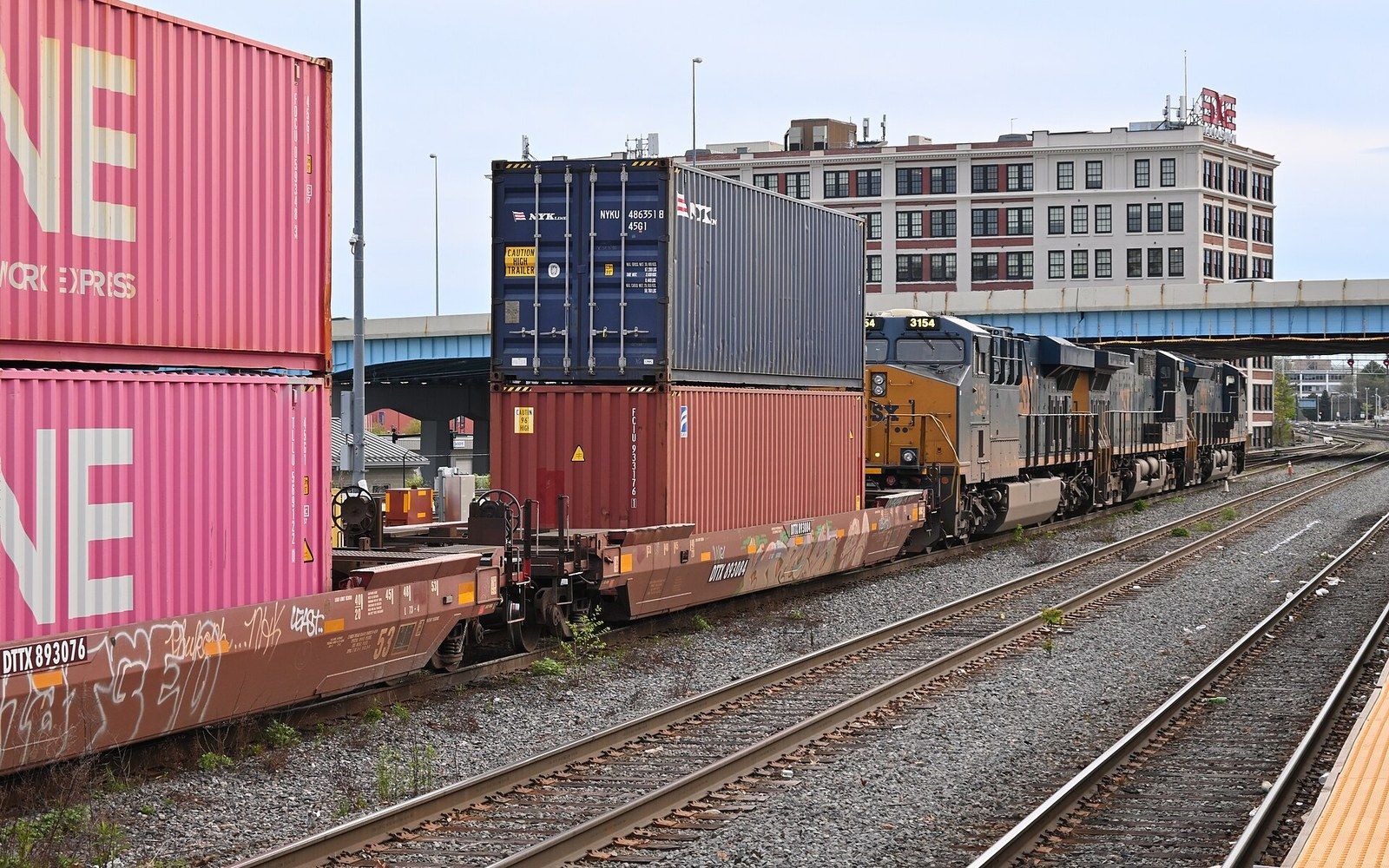
The seal stays on. Nothing is unpacked between the ship’s crane and the warehouse door.
Photo: CSX Double Stack train in Worcester · Wikimedia Commons
None of this was designed. Malcom McLean standardized the box; the ISO standardized its corners; the railroads took the long haul. The last thirty miles remained a local problem, solved locally, and it still shows.
Read next