The crane that had to be invented
Twistlock, lashing rod, and the hand that fits them
The box is standard. The sea is not. Between those two facts sits a set of fittings and the person who tightens them.
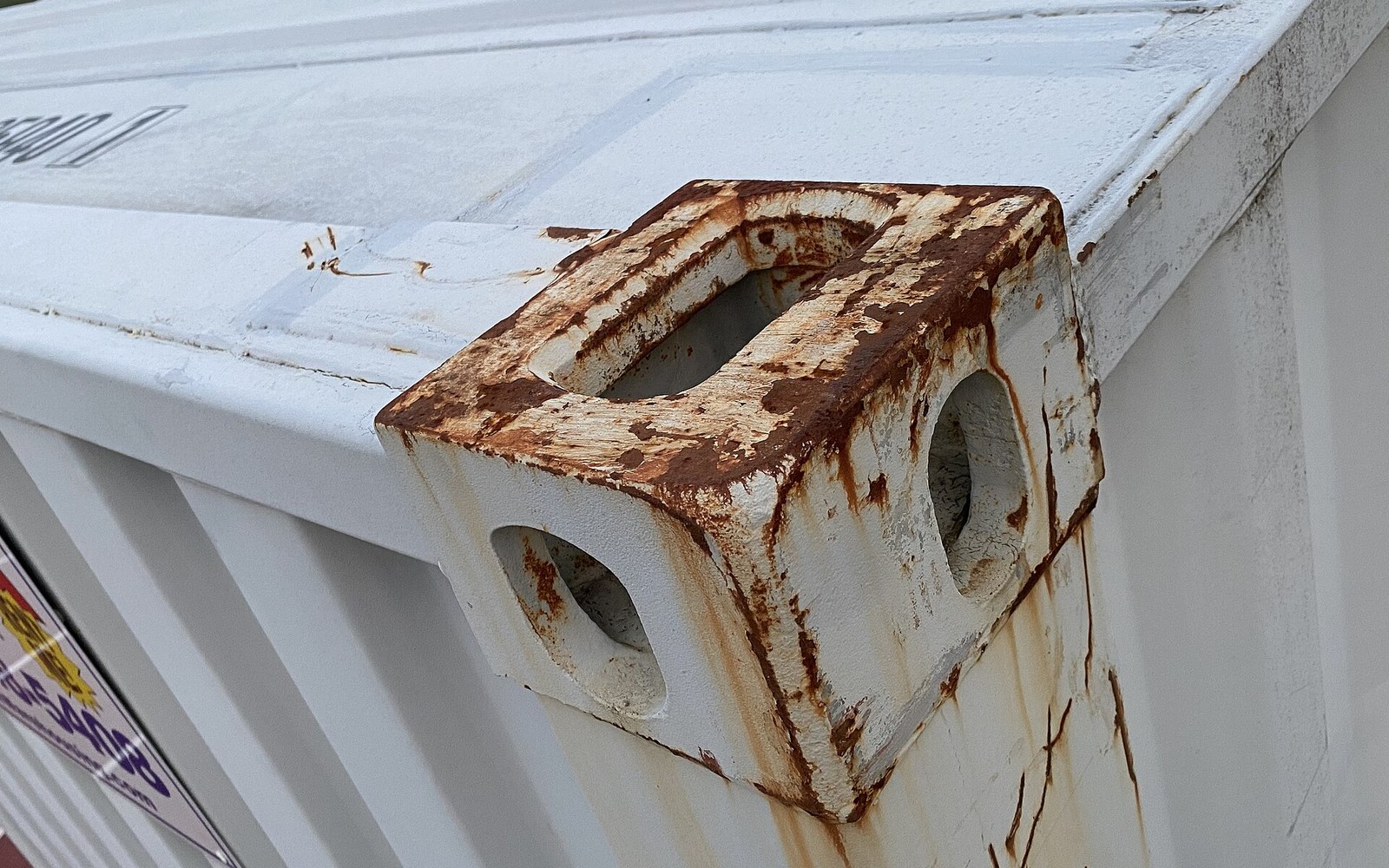
The twistlock drops through the casting aperture and turns a quarter circle. Everything above deck stands on that.
Photo: Container twistlock connector.agr · Wikimedia Commons
The fitting that makes the stack possible
A container's corner — each of its eight corners — carries a cast-steel corner casting with oval apertures on three faces. Into those apertures go twistlocks: fittings whose body drops into the lower box's top casting and whose rotating head engages the bottom casting of the box stacked above. A quarter-turn locks the two boxes together. The geometry is simple enough that ISO standardised the corner casting dimensions decades ago, which is why a box made in one country can be locked to a box made in another without any measurement being taken on the dock.
At sea, the twistlock is the joint. A standard stack on a containership runs five, six, sometimes seven boxes high above deck. The ship moves in three axes simultaneously — rolling, pitching, yawing — and the stack behaves like an inverted pendulum, multiplying acceleration with height. Twistlocks resist that tendency by keeping adjacent tiers from sliding relative to each other. They are the primary connection.
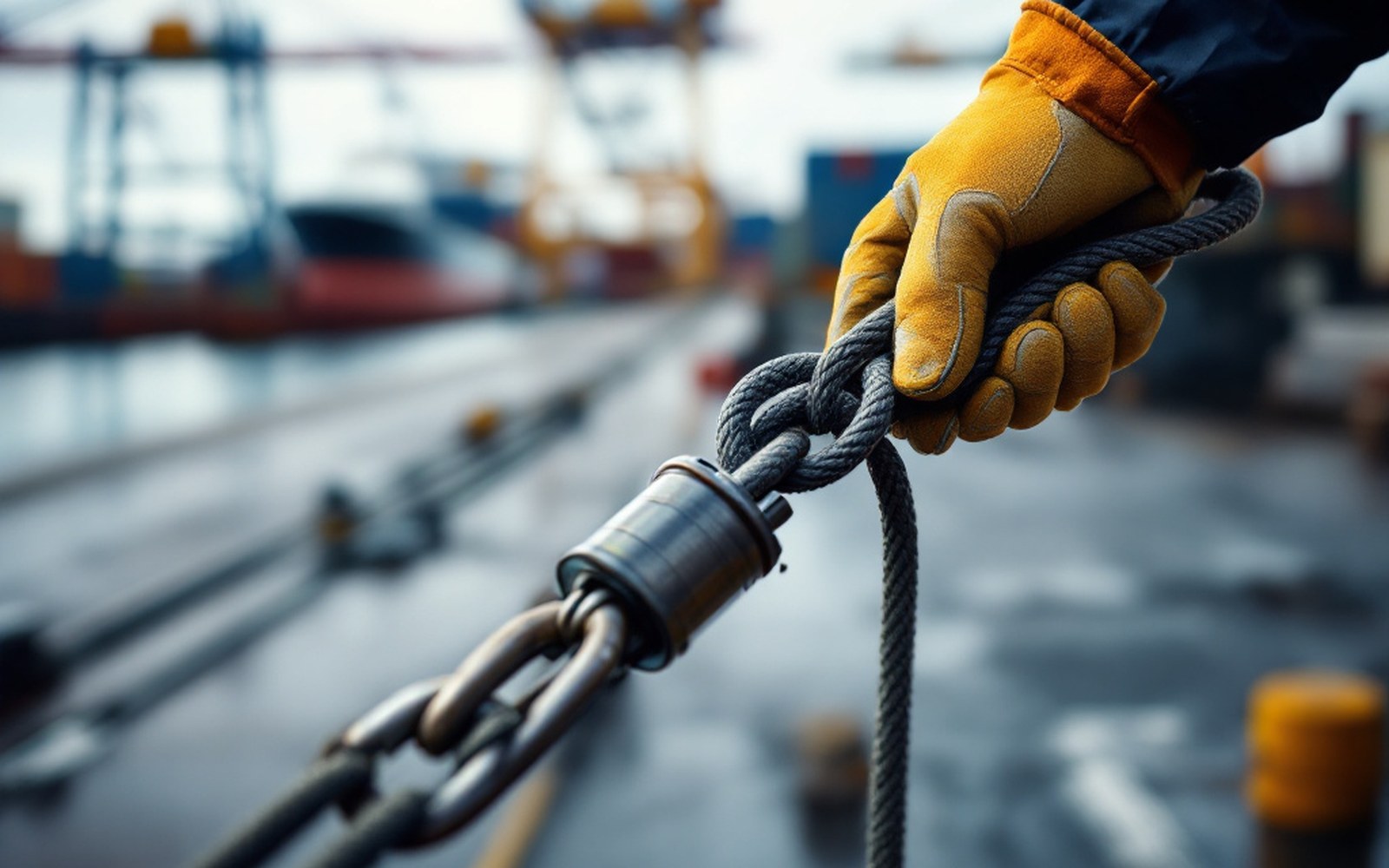
Above deck the stack is held by hand — a rod from the box’s upper casting to a deck fitting, tensioned with a turnbuckle.
Where the rods come in
Twistlocks alone are not enough for the upper tiers. That is where lashing rods are rigged: steel rods, typically threaded at both ends, running diagonally from deck fittings or fixed bridge fittings on the ship's structure to the corner castings of boxes two or three tiers up. The rods are tensioned with turnbuckles. A correctly lashed upper tier is held against the sway and surge that would otherwise walk it off the stack.
The calculation behind a lashing plan — which tier gets how many rods, at what angle, with what tension — is not guesswork. It is worked out against the ship's stability data, the route's expected sea-states, and the declared weights of the individual boxes. A misdeclared weight, a box heavier than its paperwork states, changes the load distribution across an entire bay. That is why cargo weight verification became a mandatory element of the SOLAS Convention's container weight rules, in force from 2016: the lashing plan depends on knowing what it is securing.
Chronology of the key standard and rule
- Late 1960sISO first standardises corner casting apertures, fixing the twistlock's interface permanently
- 2016SOLAS amendment mandating verified gross mass for containers enters force; lashing plans now require confirmed weight data
The work itself
None of this is automated. On most containerships today, lashing is done by crew after the port's gantry cranes have finished loading a bay, and before the vessel sails. That means working on top of a stack — sometimes five boxes above a moving deck, in whatever weather the port happens to be having — rigging, threading, and tensioning rods that can weigh several kilograms each. The turnbuckle is tightened by hand, or with a bar for leverage, and the correct tension is a matter of trained judgement because there is no practical torque gauge in common use.
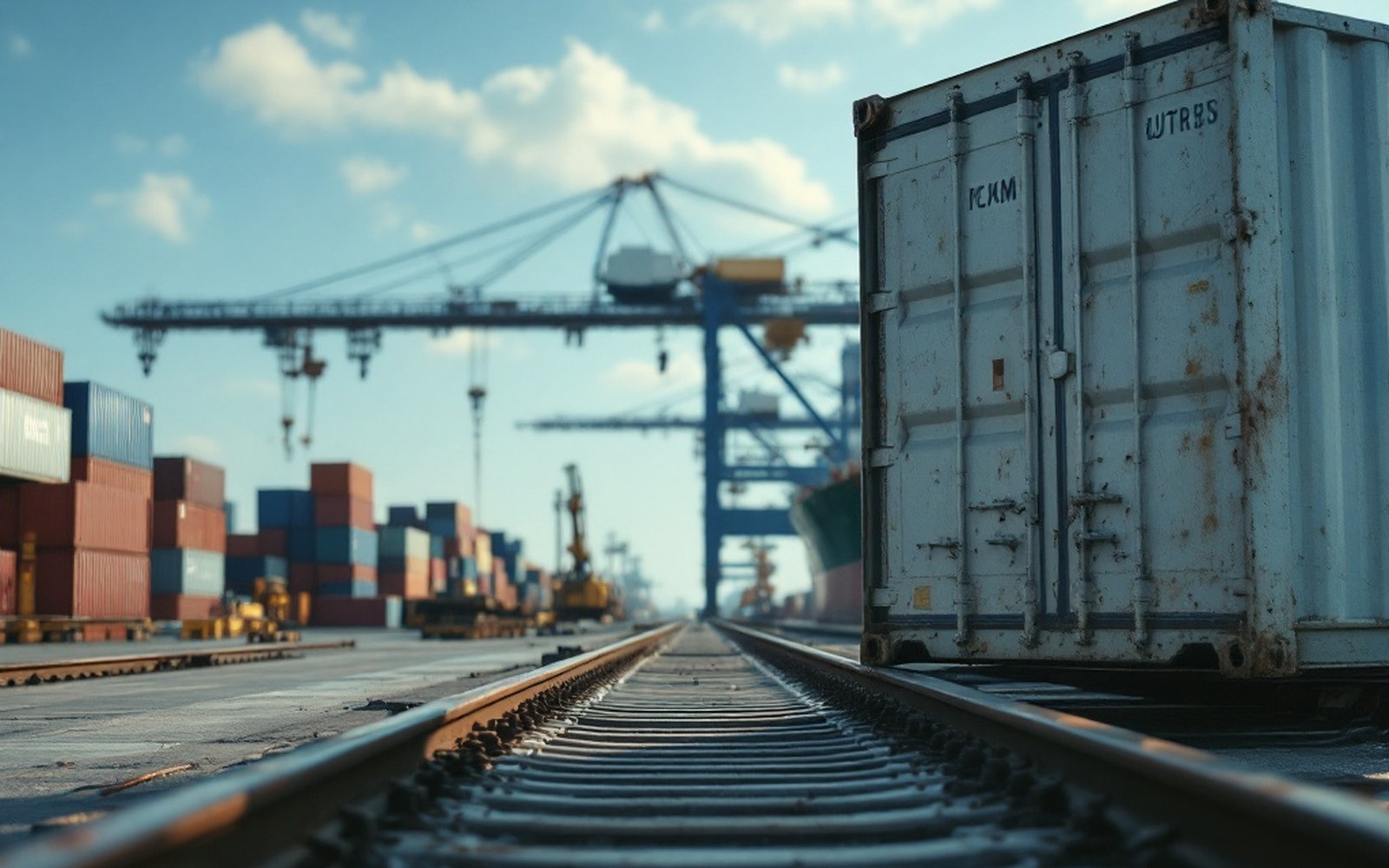
The oval apertures are the standard. A spreader, a twistlock and a chassis pin all address the same casting.
Automation of lashing has been discussed for years and attempted in isolated terminal experiments, but the geometry of the problem resists it: every bay is different, every stack height varies, and the rod angles change with the load. The gantry crane's spreader — the frame that descends to grip a container's corner castings and lift it — can be designed to fit a standard box precisely. The lashing rod cannot be designed to fit a standard situation, because no standard situation exists.
The result is that the most physically demanding, weather-exposed manual task in a modern automated terminal is not on the dock — it is sixty feet above it, on a stack of boxes that will shortly be at sea. Port automation has redrawn the waterfront in almost every respect. The person with the lashing rod remains.
Named in this piece
Read next