The same box, without opening it
The bill of lading, which is older than any of it
The one document that is simultaneously a receipt, a contract of carriage, and a title to the goods — and the reason a container can change hands somewhere in the Indian Ocean without anyone opening it.
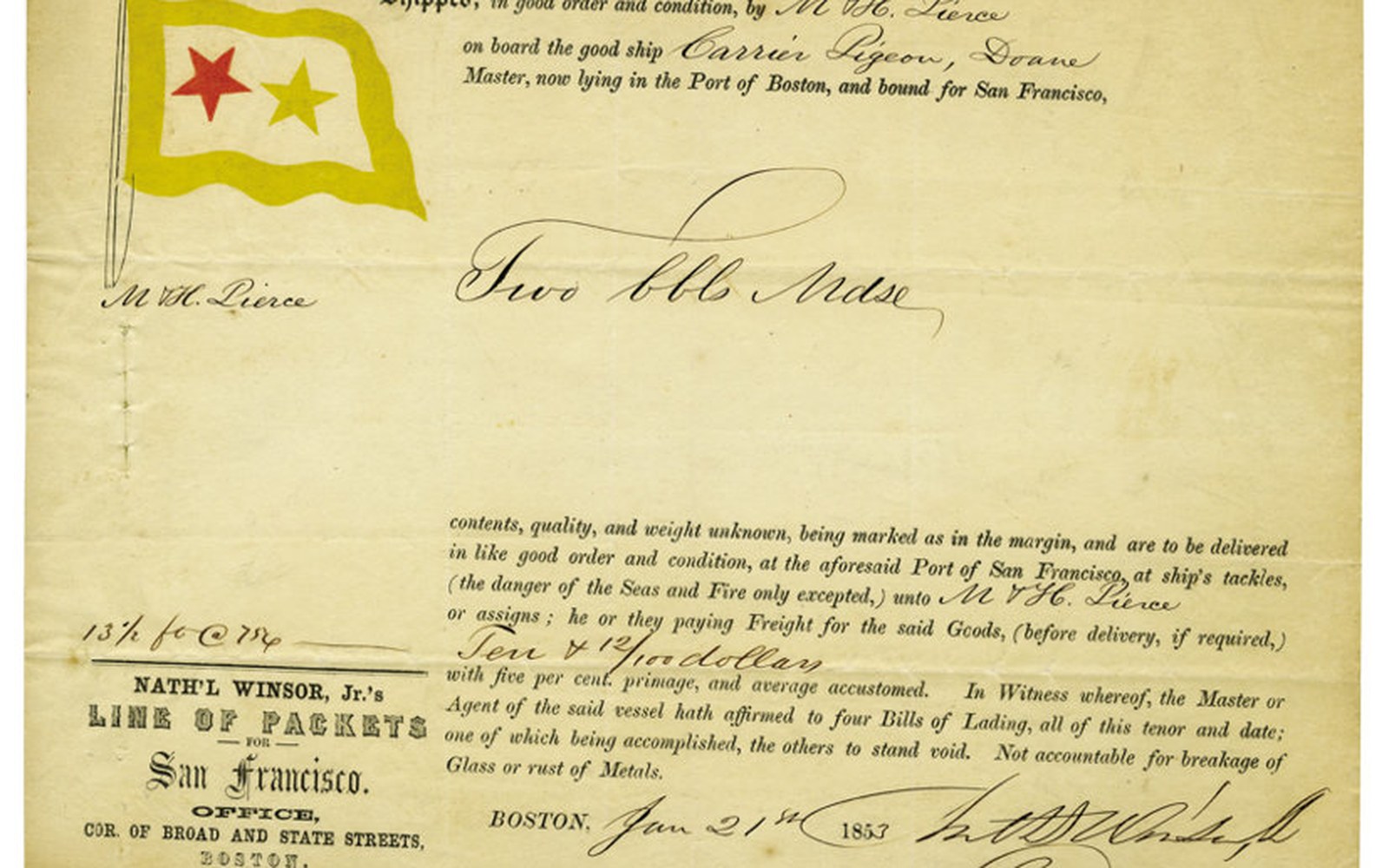
Marks, numbers and apparent condition. With a sealed box the document can only record what the shipper declared.
Photo: CARRIER PIGEON bill of lading, (clipper ship) 1853 · Wikimedia Commons
What the document is doing
A bill of lading is three things at once, and the overlap between them is not an accident of history but the whole point. It is a receipt: the carrier acknowledges that the goods described have been loaded in the stated condition. It is a contract of carriage: the terms under which the carrier will deliver are set out on its face or incorporated by reference. And it is a document of title: whoever holds the original can claim the cargo. All three functions live in a single piece of paper, and that compression of legal weight into one transferable instrument is why the document predates containerisation by roughly five centuries.
The oldest surviving examples of what we would recognise as bills of lading come from Mediterranean trade in the fifteenth and sixteenth centuries, when Venetian and Genoese merchants needed a mechanism to sell goods that were already at sea. The British Library holds examples from the early modern period that show the structure already settled: description of goods, name of vessel, port of loading, port of discharge, conditions of delivery, and the carrier's acknowledgement. The terminology changed over the following four hundred years; the architecture did not.
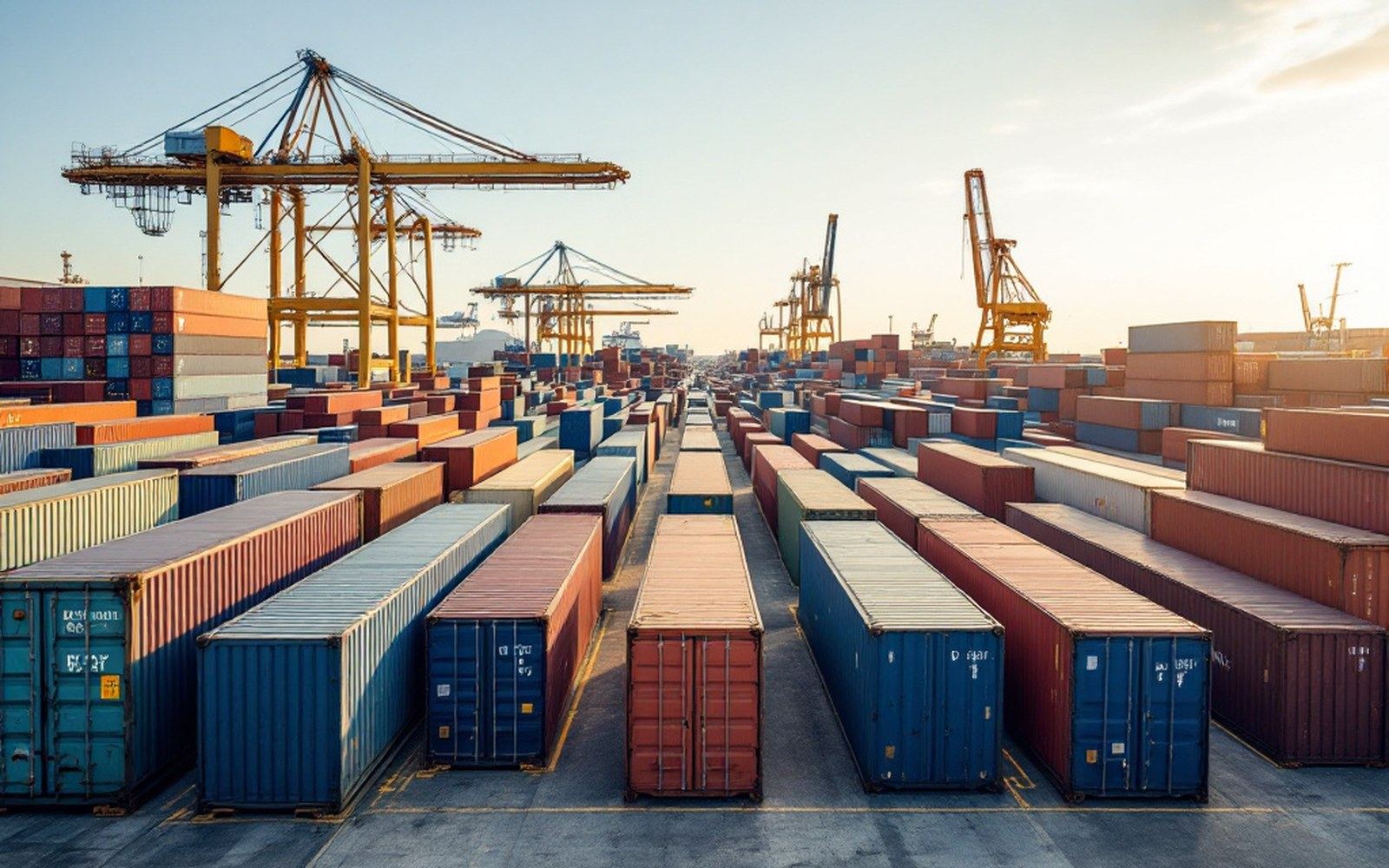
Twenty and forty foot boxes in the same rows. Capacity is counted in the shorter one, which is why the figures rarely match what you can see.
What containerisation did was not change what a bill of lading is, but radically change what is being described. Before the box, a bill of lading might describe bales of cotton, hogsheads of tobacco, or crates of machinery — cargo that a stevedore could inspect, count and record. After April 1956, when Malcom McLean's Ideal X sailed from Newark with fifty-eight trailer bodies secured to its deck, the document began to describe sealed steel boxes. The carrier cannot see what is inside. The bill of lading for a container movement typically reads "said to contain" — the shipper's description, accepted by the carrier as stated, with no independent verification. The document's legal weight is unchanged; what has shifted is the epistemic position of everyone who signs it.
The three functions in practice
As a receipt, the bill of lading records the apparent condition of the goods at the time of loading. Notations matter enormously here. A clean bill — one carrying no remarks — means the carrier accepted the cargo as described, without visible damage or discrepancy in count. A claused bill carries a notation: a dented box, a short-shipped pallet, a container that arrived at the terminal already showing signs of moisture. Bankers and insurers read these notations carefully; a claused bill can complicate payment under a letter of credit.
As a contract of carriage, the bill incorporates the carrier's standard terms — the so-called conditions on the back, a dense block of text that most traders never read but which determines who bears loss in almost every dispute that arises. The governing international framework is the Hague-Visby Rules, a set of liability provisions that originated in the 1924 Brussels Convention and were amended in 1968. They set minimum obligations on the carrier and cap liability per package or unit of weight — a cap whose adequacy has been debated ever since containers made "package" an ambiguous word. Is the package the container, or each carton inside it?
One document covers both. What changed is that the carrier now receives a sealed box and records what the shipper declared.
Lengths overall as published by their owners; profiles schematic.
As a document of title, the bill's negotiability is where it earns its age. A negotiable bill of lading — the original, typically issued in a set of three originals — can be endorsed and transferred, passing title to the cargo while the ship is still at sea. A trader in Rotterdam can buy a cargo of copper cathodes that is currently transiting the Strait of Malacca, pay by letter of credit, receive the endorsed bill, and be the legal owner of a box he has never seen, on a ship he has never visited, operated by a carrier he may never deal with again. The document makes this possible because it is the cargo, in law, until the moment it is surrendered at the port of discharge in exchange for the goods themselves. No original bill, no delivery — the carrier is obligated to hold the cargo against presentation.
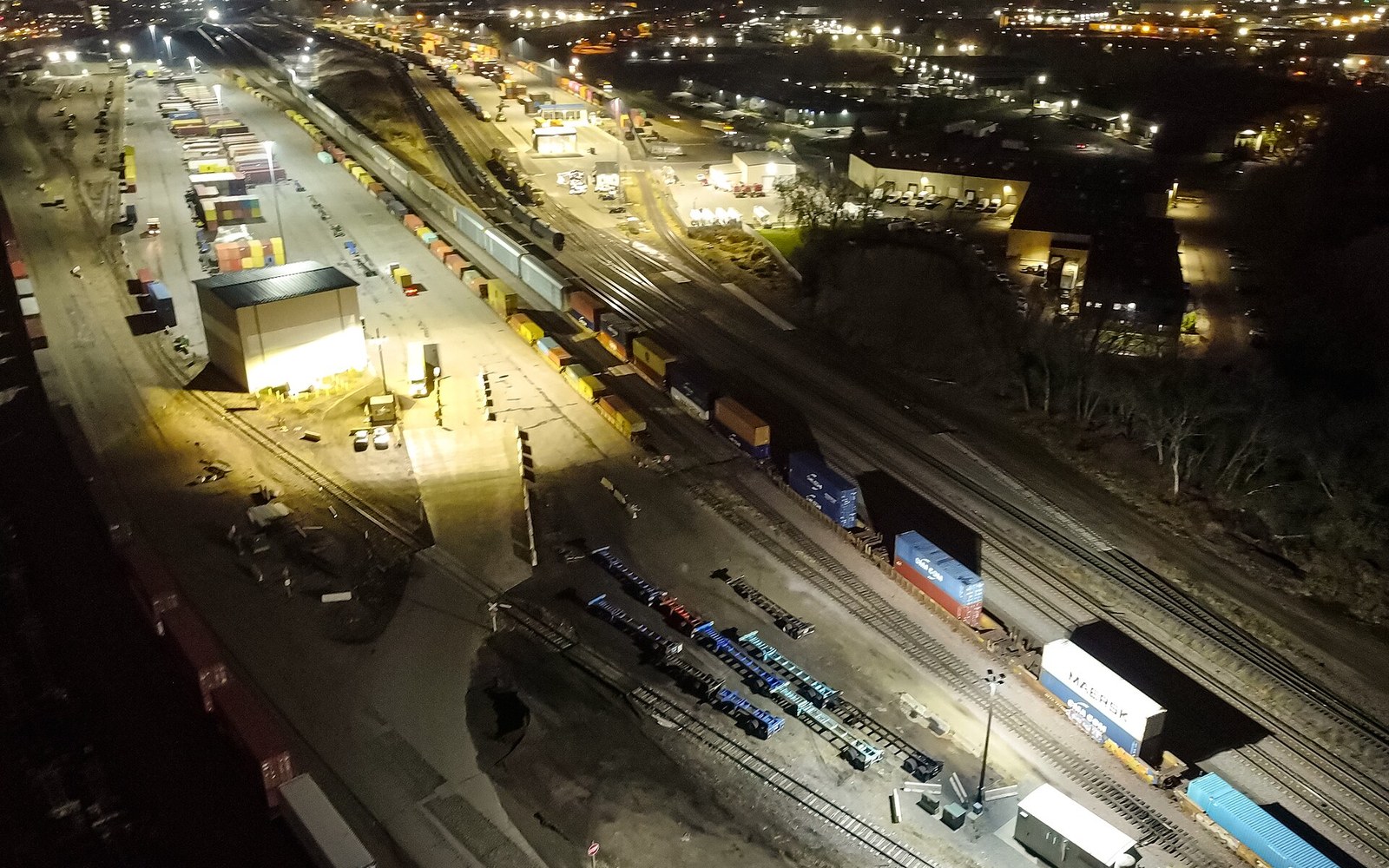
Rows run perpendicular to the quay so one crane can serve several at once. The depth of the stack is the terminal’s real capacity.
Photo: Container terminal in Minneapolis · Wikimedia Commons
What digital substitution has and has not solved
The paperless bill of lading has been theoretically possible since the 1990s, and the legal frameworks for electronic equivalents exist — most notably the UNCITRAL Model Law on Electronic Transferable Records, adopted in 2017. Several platforms now issue what are called electronic bills of lading, or eBLs, and the industry body BIMCO has published standard clauses for their incorporation into contracts. The CMI Rules for Electronic Bills of Lading published by the Comité Maritime International in 1990 were among the first systematic attempts to replicate the transfer mechanism digitally.
Timeline of the legal framework
- 15th–16th centuryearliest recognisable bills of lading in Mediterranean trade
- 1924Brussels Convention; foundational carrier liability rules
- 1968Visby Protocol amends the 1924 Rules; Hague-Visby Rules in current form
- 1990CMI Rules for Electronic Bills of Lading (first systematic eBL framework)
- 2017UNCITRAL Model Law on Electronic Transferable Records adopted
Adoption has been slow. A document whose legal power rests on physical possession is conceptually awkward to digitalise without widespread agreement on which registry system is authoritative — and which law governs disputes when the shipper is in one jurisdiction, the carrier registered in another, and the cargo passing through a third. As of the early 2020s, eBLs account for a small fraction of total bill of lading issuance globally. The paper original, sent by courier between banks and traders, remains the instrument on which most international cargo title actually moves.
The box changes nothing and everything
The ISO standardisation of the container — its corner castings, its dimensions, the twistlock that couples it to a chassis — created the physical interoperability that made global containerised trade work. The bill of lading is the legal interoperability that sits underneath it. A forty-foot box loaded in Shenzhen and discharged in Rotterdam will pass through the care of multiple parties: terminal operators, feeder carriers, a road haulier on the drayage leg, possibly a rail operator. Each handoff is documented. The master bill of lading governs the ocean leg; house bills, issued by freight forwarders acting as intermediaries, cover the full door-to-door move and incorporate the terms of the master by reference. The document tree is not always simple.
A document that is simultaneously a receipt, a contract and a title to the goods — and the reason a container can be sold while at sea.
What does not change across any of these handoffs is the fundamental function. Someone has acknowledged receipt of goods described in a stated condition. Someone has agreed to deliver them. And until the original document is surrendered, the goods belong to whoever holds it. The container is a rectangle of Corten steel, standardised to millimetre tolerances and lifted by a gantry crane in seconds. The bill of lading is a Venetian merchant's instrument adapted to carry the weight of modern trade. Between them, they are the whole system.
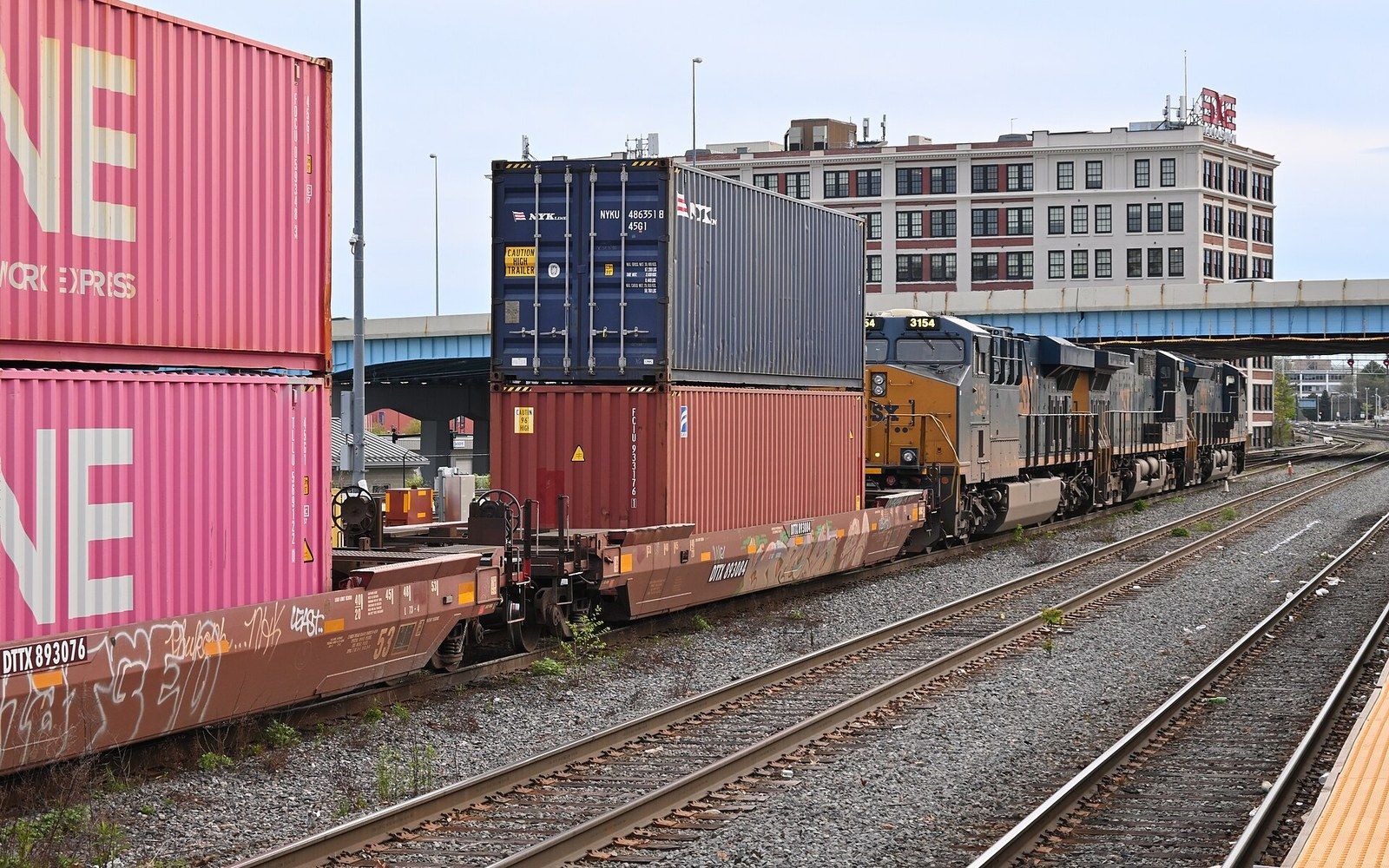
The seal stays on. Nothing is unpacked between the ship’s crane and the warehouse door.
Photo: CSX Double Stack train in Worcester · Wikimedia Commons
Named in this piece
Read next