The water ran out before the shipyards did
Panama's 2016 locks, and the ships that no longer fit
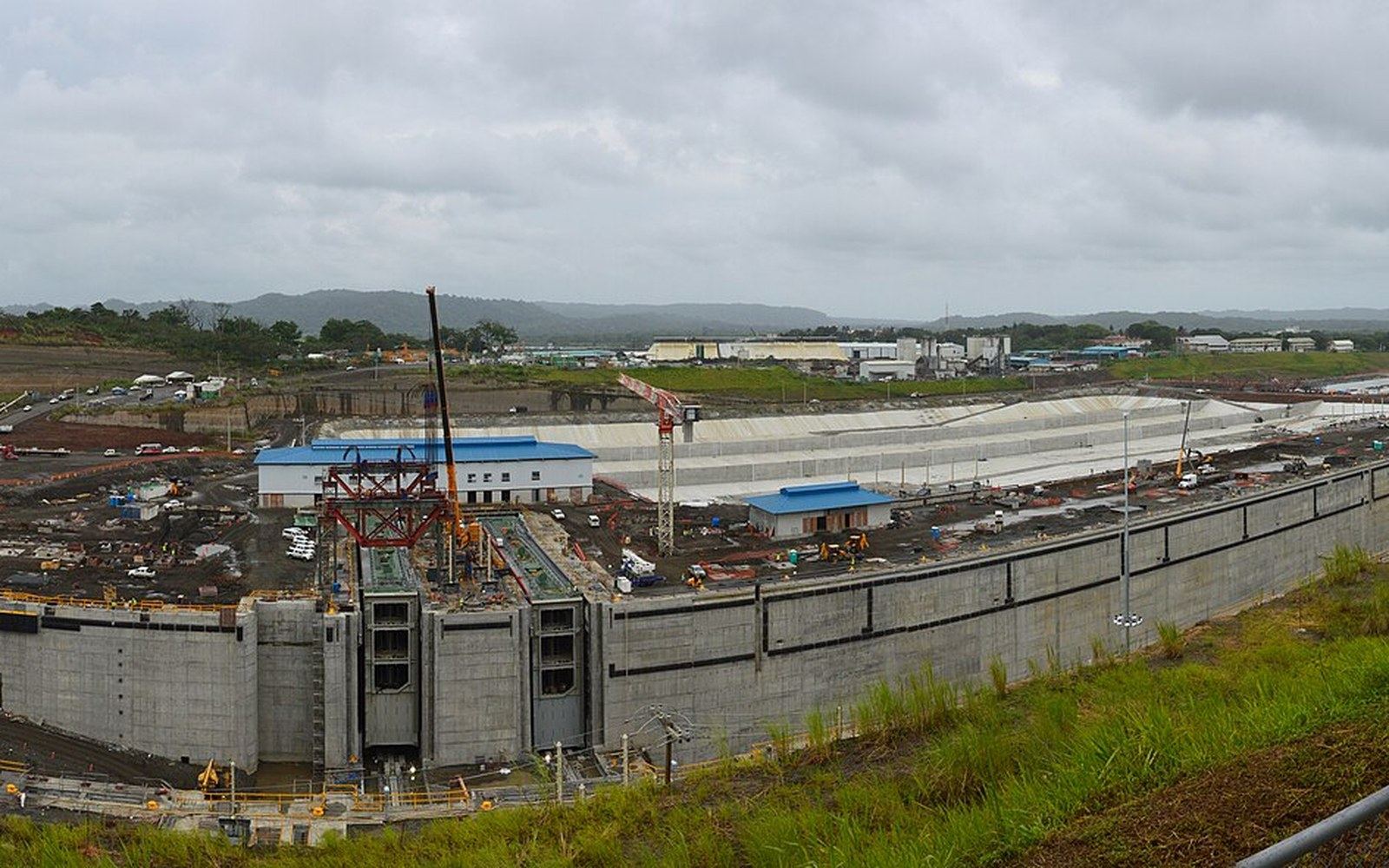
The new chambers under construction. Rolling gates slide sideways into the wall recesses instead of swinging shut.
Photo: New Atlantic Locks of Panama Canal expansion project in 2015 · Wikimedia Commons
The canal that resized itself
For most of the twentieth century, the Panama Canal set a ceiling on ship design as surely as any shipyard's ambition. The original locks, opened in 1914, could accept a vessel no wider than roughly 32.3 metres — about 106 feet — and no longer than 294 metres. That envelope became a design target. Builders converged on it, operators planned around it, and the industry gave the ceiling a name: Panamax. A Panamax vessel was not merely one that could pass the canal; it was the efficient ship, the one that extracted the maximum cargo from the minimum tolls and the maximum lock dimensions. For decades the category shaped fleets the way a river mouth shapes a delta.
Then, on 26 June 2016, the expanded canal opened to commercial traffic. A third set of locks — wider, longer, deeper — added a parallel channel that could take vessels up to 49 metres in beam, 366 metres in length, and drawing up to 15.2 metres. The Panama Canal Authority designated the new limit Neo-Panamax. Everything that had been built to the old dimensions was suddenly something else: not the efficient ship, but the merely adequate one, a vessel whose proportions answered a question the canal had stopped asking.
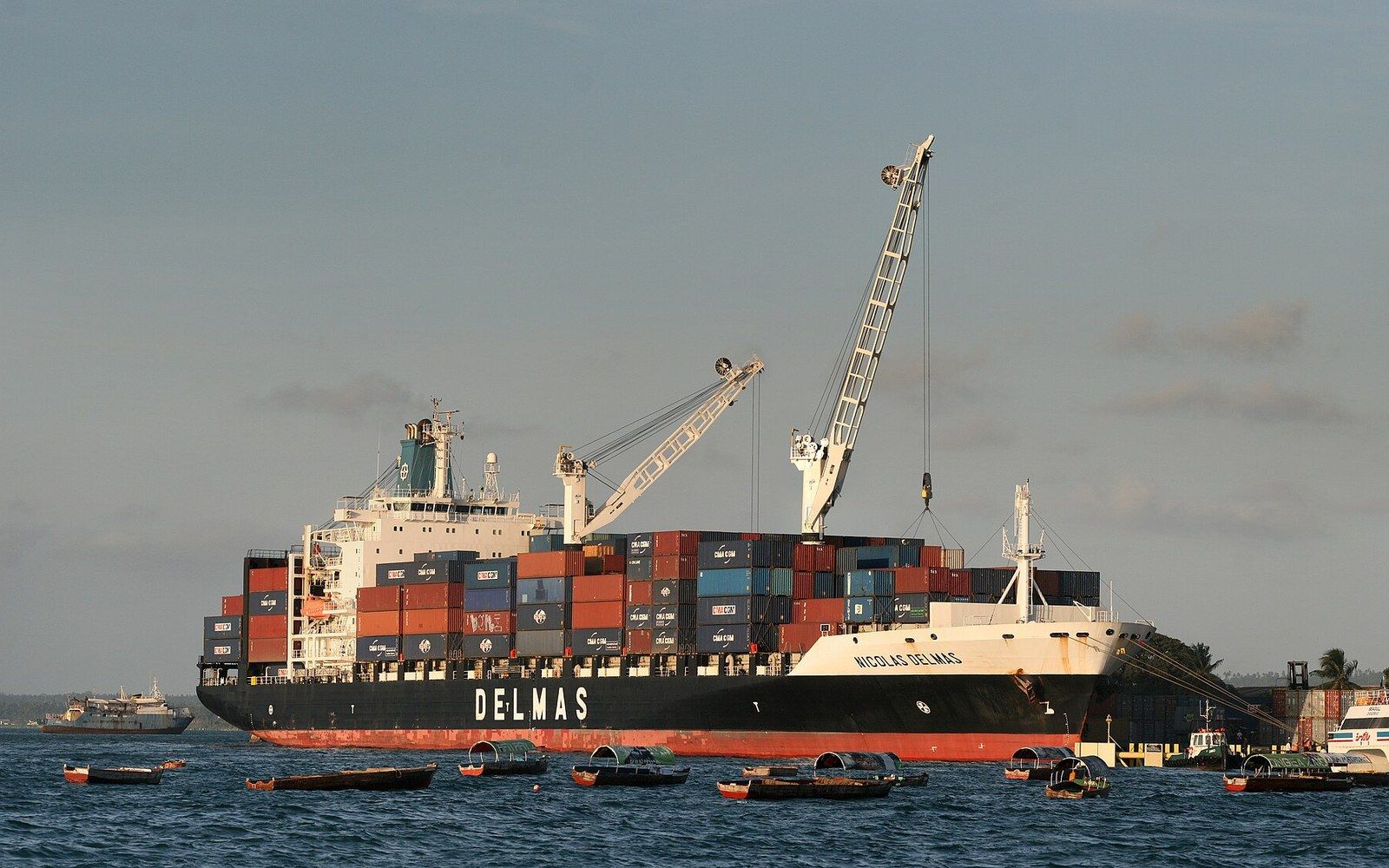
Ship’s gear rather than shore gear. A vessel carrying its own cranes can work a berth that has none.
Photo: Container Ship · Wikimedia Commons
What the expansion actually built
The new locks were not a widening of the old ones. They were an entirely separate structure — two new lock complexes, one on the Atlantic side near Agua Clara, one on the Pacific side near Cocolí — each using water-saving basins that recirculate about sixty percent of the freshwater each transit uses. This was an engineering necessity as much as an environmental one: the canal depends on Gatun Lake, a freshwater reservoir fed by rainfall, and each lockage drains water to the sea. The original locks, built for far smaller ships, were already straining that balance. Larger locks without recycling basins would have been hydrologically unsustainable.
The new lock chambers dispense with the original canal's rail-mounted electric mules and use tugboats to guide ships through — but the key change for shipping was dimensional. The new beam limit of 49 metres allowed container ships carrying around 12,000 to 14,000 TEU to transit where the old maximum had been roughly 5,000. A TEU, or twenty-foot equivalent unit, is the standard counting unit for containerised capacity: one forty-foot box equals two TEU, and the numbers compound quickly at scale. Ships that had been purpose-built for post-Panamax East Asian trade — the so-called New Panamax or Neo-Panamax class — could now make the Atlantic-Pacific crossing without the Cape Horn alternative.
The stranding of a category
What the expansion also did, less remarked upon at the time, was strand a generation of vessels. The classic Panamax container ship — typically around 4,000 to 5,000 TEU, beam near the 32-metre limit — had been built to serve a specific trade logic: transit the canal, call at East Coast US ports that could handle the draught, and compete on frequency rather than scale. That logic held as long as the canal was the bottleneck. Once the new locks opened, the economics shifted. Ultra-large carriers could now access the same routes, spreading their fixed costs over two or three times the cargo. A 4,500-TEU Panamax suddenly looked expensive per box — not because it had changed, but because its context had.
Chamber 427.0 m by 55.0 m, taking a ship to 366.00 m by 51.25 m. Thirteen rows of containers across becomes twenty.
Drawn to one scale from maximum transit dimensions published by the Panama Canal Authority.
This is the structural irony of infrastructure expansion: it does not only create winners. It reclassifies the fleet that was already there. Panamax tonnage did not disappear — draught limits at destination ports still constrain what can call where, and many secondary ports on both US coasts were never built for the deeper Neo-Panamax beam and draught — but the category slipped from optimal to residual. The ships found work in trades the giants could not serve: smaller ports, shallower harbours, routes where frequency matters more than scale. They became feeders, in effect, to a system they had once dominated.
The shipowners who had ordered large Panamax vessels in the years just before 2016 absorbed a quiet write-down: not a loss on the hull, but a loss on the premium that Panamax proportions had once commanded. New orders after 2016 skewed hard toward Neo-Panamax and larger. The intermediate category — vessels sized above old Panamax but below the new limit — also grew, as operators sought to exploit the new locks without committing to the operational complexity of ships above 18,000 TEU, which the canal's new locks still cannot accept at all.
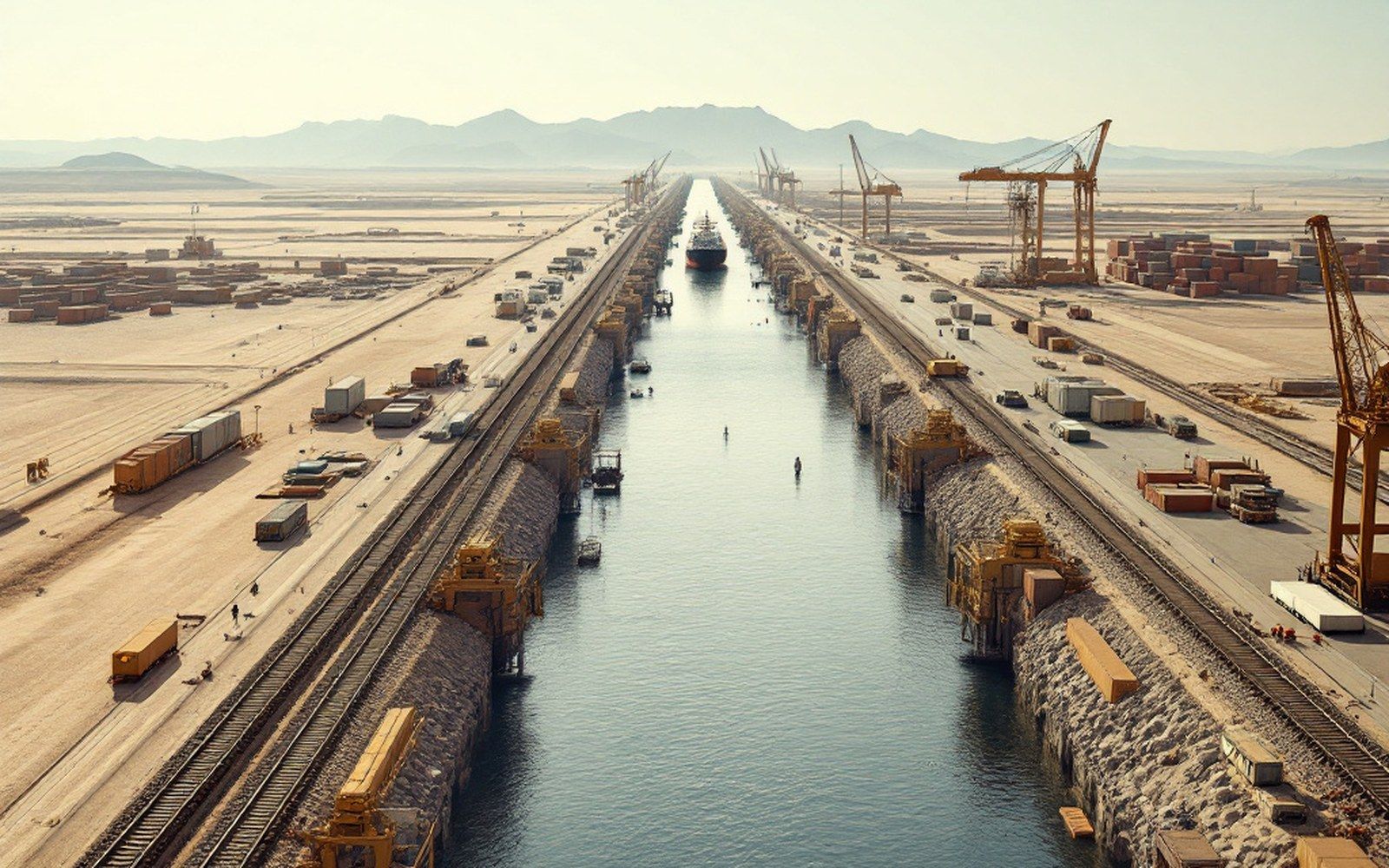
No locks, and never any. What Suez limits instead is how deep a loaded hull may sit.
The chokepoint that remained
It would be a mistake to conclude that the expansion resolved Panama's role as a constraint. It displaced it. Ships above roughly 366 metres in length or 49 metres in beam — the largest classes now sailing, sometimes exceeding 400 metres and 61 metres — remain barred from any Panama transit. They sail via Suez, via the Cape of Good Hope, or they simply do not change oceans. The Strait of Malacca, with its own depth ceiling of around 25 metres at the southern end, similarly caps what ultra-large vessels can physically do in Southeast Asian waters.
Chronology
- 1914Original Panama Canal locks open to commercial traffic
- 2006Panamanians approve the third-lock expansion in a referendum; construction begins in 2007
- 2016, 26 JuneExpanded canal opens; first Neo-Panamax commercial transit
- 2023Drought-driven draught restrictions reduce effective Neo-Panamax transit capacity
Meanwhile, the expanded canal introduced a new domestic constraint that the Panama Canal Authority monitors continuously: water. Extended dry seasons — linked to El Niño patterns and longer-term climatic shifts — have periodically reduced Gatun Lake levels to the point where the canal authority has imposed draught restrictions, limiting how deep a transiting vessel may sit in the water. In late 2023, restrictions cut the permissible draught for Neo-Panamax transits significantly, reducing effective capacity per crossing and forcing some operators to lighter their ships — removing cargo — before entry. A canal built to let more water flow through the locks found itself, in certain seasons, with less water to spare.
The expansion of 2016 was a genuine piece of infrastructure achievement: a decade of engineering, a substantial capital commitment by the Republic of Panama, and a measurable shift in what global shipping could do. But it did not unmake the canal as a chokepoint. It raised the ceiling, changed the shape of the fleet optimised around that ceiling, and quietly demoted the ships that had been built for the room that no longer defined the room. The box travels the same water. The question of which box fits has simply been renegotiated.
The expansion redefined the size classes, and the ships built for the old locks became a category of their own.
Named in this piece
Read next