The water ran out before the shipyards did
Suez, and the depth that decides everything
A waterway's draught limit is more decisive than any naval architect's ambition.
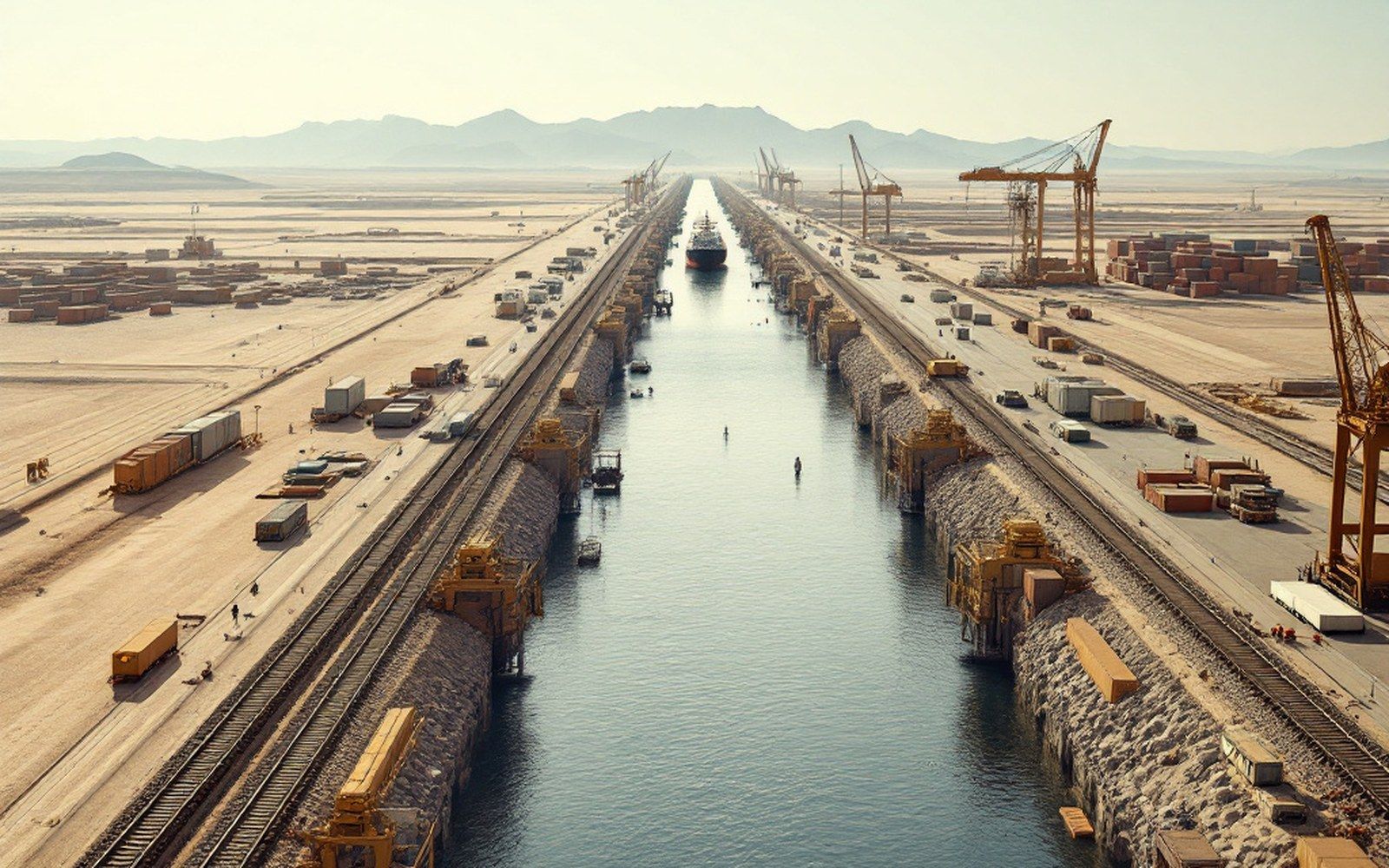
No locks, and never any. What Suez limits instead is how deep a loaded hull may sit.
The number that shapes the ship
The Suez Canal carries roughly 12 percent of global seaborne trade, connecting the Red Sea to the Mediterranean without a lock chamber anywhere along its length. That absence of locks is what makes draught — the vertical distance between waterline and keel — the single constraining figure. There is no lifting mechanism to compensate for a deep-hulled vessel; if the ship draws more water than the channel allows, it does not pass.
For decades the authorized draught sat around 16 metres, defining an entire generation of vessel. Shipyards did not design hulls and then ask whether they would clear the canal; they designed to the canal and worked backwards. Beam, length, and TEU capacity followed from that fixed depth. The class of ship that just fits is named for the waterway itself: a Suezmax, adapted here from tanker terminology but understood across containerisation as the boundary condition the canal imposes.
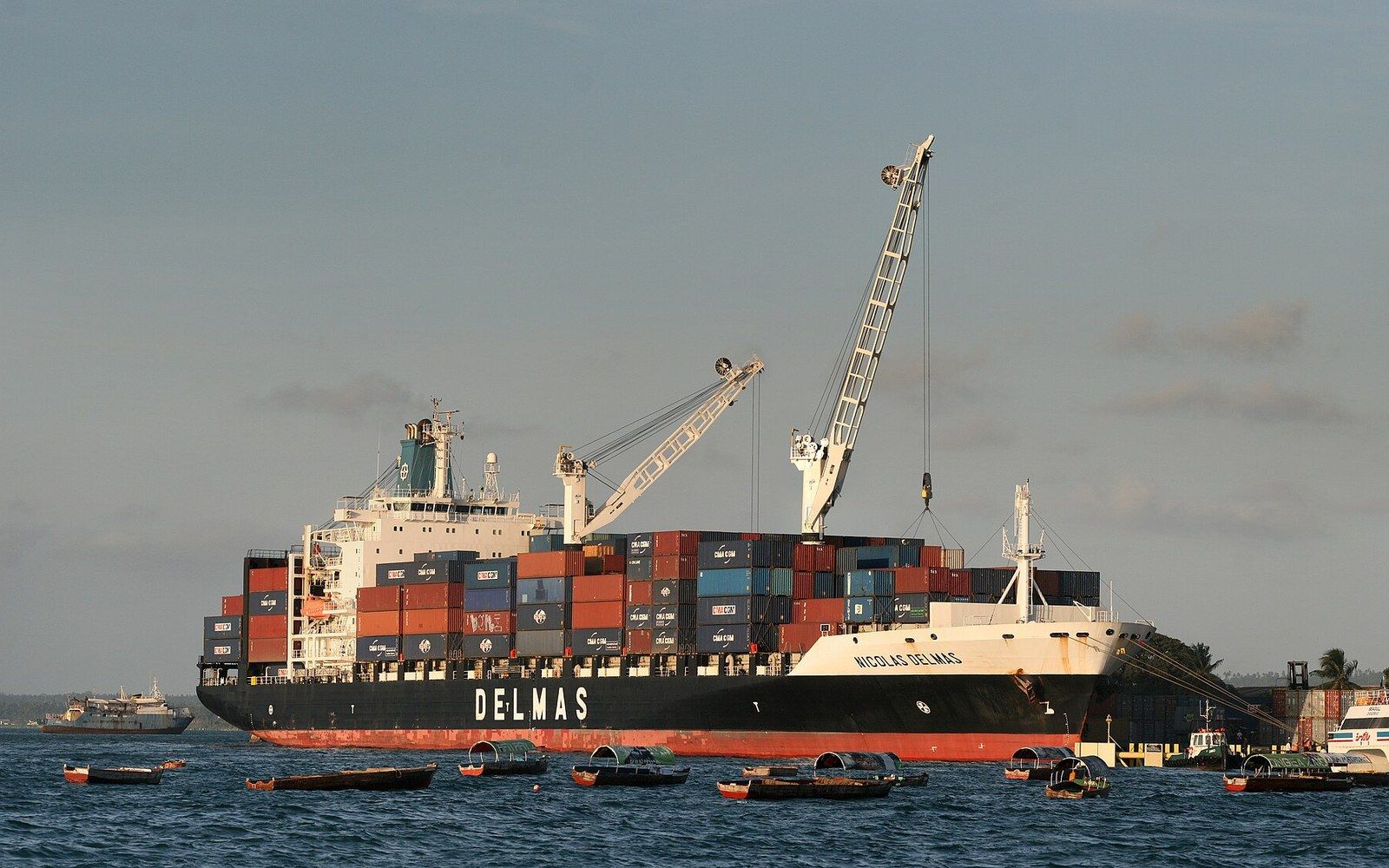
Ship’s gear rather than shore gear. A vessel carrying its own cranes can work a berth that has none.
Photo: Container Ship · Wikimedia Commons
The canal's 2015 expansion — a parallel channel and deepened sections — pushed the allowable draught for laden container vessels toward 20.1 metres in the southern reaches, while the practical limit for the new cut sits somewhat shallower in full-load conditions. Even that headroom is finite. The very largest container ships, those north of 20,000 TEU with draughts approaching 16–17 metres, transit within the authority's draught guidelines, but the margin that remains is not unlimited. The canal does not flex for the ship; the ship flexes for the canal.
Key constraint figures
Contrast this with the Panama Canal, where locks set the binding constraint and draught is secondary to beam and length. Suez reverses that hierarchy. Width is generous; depth is not. A naval architect working on a Suez-routed vessel optimises the hull form around that one published number from the Suez Canal Authority, and every other dimension — cargo plan, stack height, stability — arranges itself accordingly.
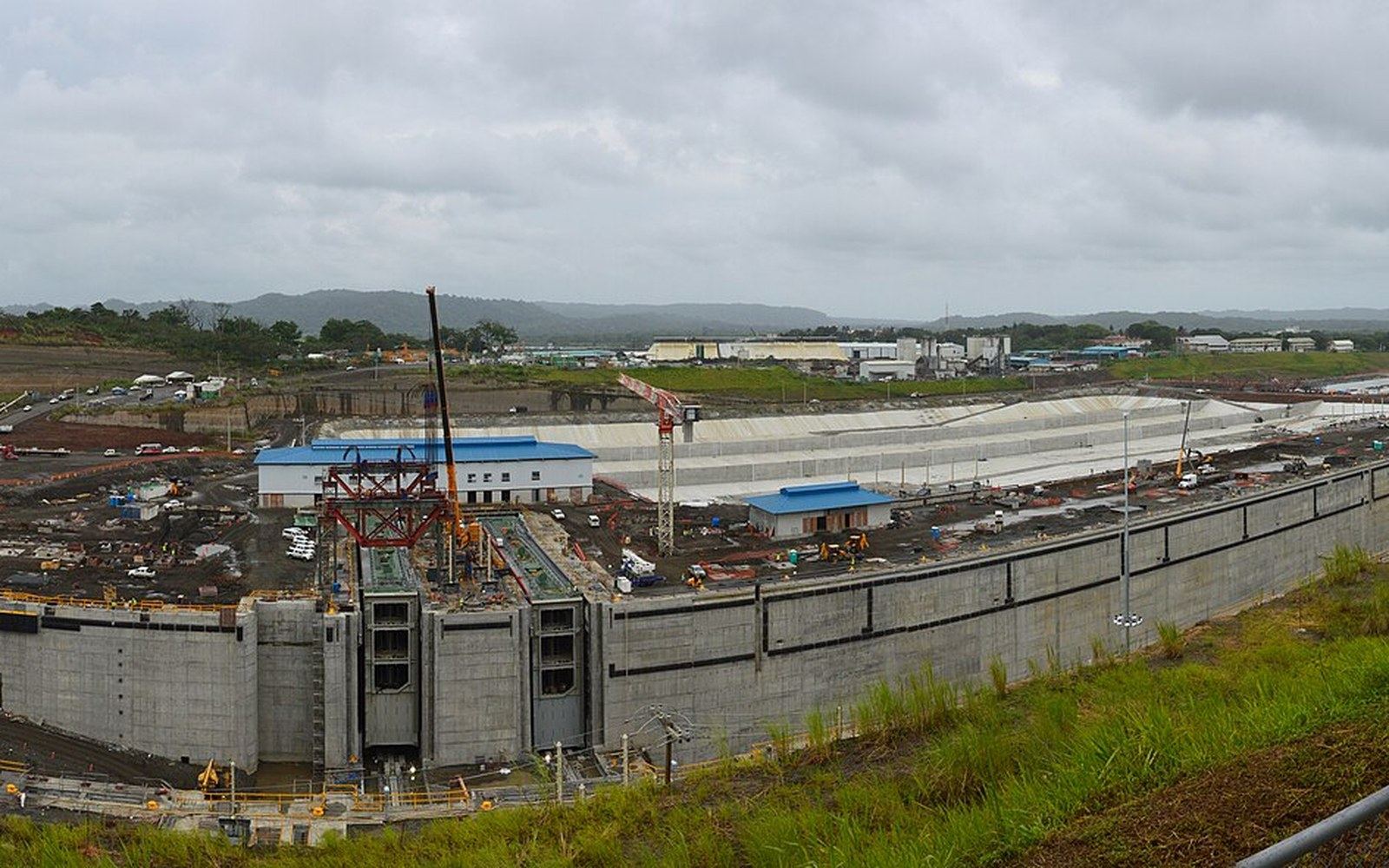
The new chambers under construction. Rolling gates slide sideways into the wall recesses instead of swinging shut.
Photo: New Atlantic Locks of Panama Canal expansion project in 2015 · Wikimedia Commons
The bill of lading does not mention draught. The design of the ship does nothing else.
Named in this piece
Read next