Everything that had to change around the box
Everything that had to change around the box
The Ideal X left Newark on 26 April 1956 carrying fifty-eight trailer bodies on a converted tanker deck. The box itself was the easy part.
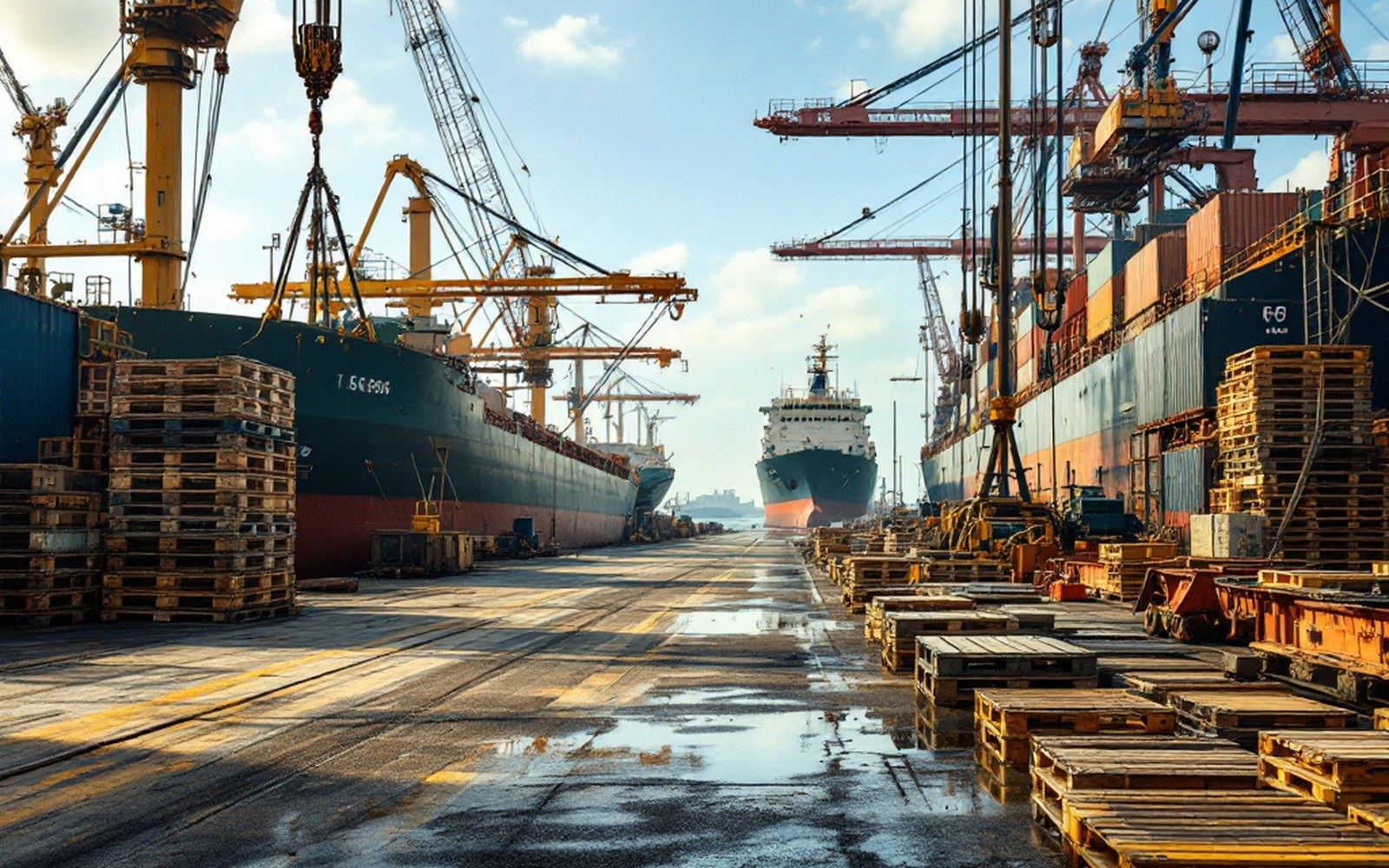
Break-bulk needed pallets, slings and a shed behind the berth. The container needed none of them and a great deal of flat land instead.
The ship was just the beginning
Malcom McLean's insight was not, in the end, about the container — it was about the system. A steel box that cannot be lifted, cannot be stacked, cannot be transferred to a railcar and cannot be documented without a new kind of paperwork is not a revolution; it is scrap metal sitting on a pier. What McLean grasped, and what the decade after Newark proved, was that the box demanded the reconstruction of almost everything around it.
The Ideal X itself was a retrofit: a T2 tanker with a reinforced deck and no below-deck stowage for the trailers it carried. That worked for a coastal run, but it could not scale. Purpose-built container ships needed cell guides — vertical steel rails running the depth of the hold — so that boxes could be lowered precisely and stacked without crashing into one another in a seaway. The guides dictated ship geometry, and ship geometry dictated berth depth, and berth depth dictated which ports could even enter the conversation. Newark could handle McLean's early ships. Many established ports on both sides of the Atlantic could not.
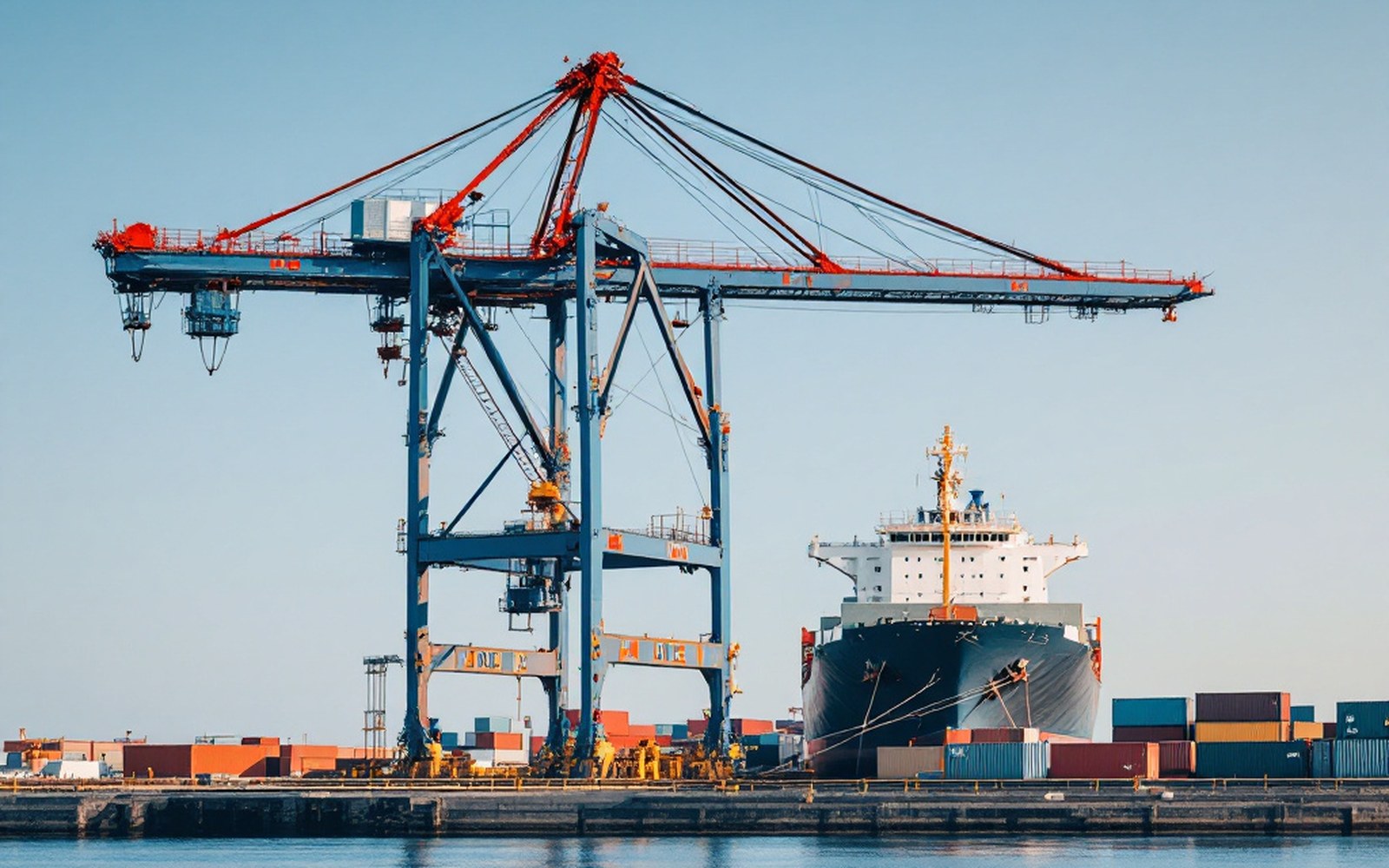
The boom carries out over the ship and the operator rides the trolley along it, working looking straight down.
The crane problem was equally total. Traditional break-bulk ships were worked by ships' own derricks or by dockside cranes built for lifting slings of loose cargo — nothing remotely capable of picking a twenty- or forty-foot steel box off a ship's deck with the precision and speed containerisation required. Ship-to-shore gantry cranes did not exist as a commercial product in 1956; they had to be designed, engineered and manufactured to suit a specific box size, a specific ship beam and a specific quay geometry. Matson Navigation, working the Pacific trade, commissioned some of the first purpose-built shore cranes in the early 1960s. The spreader bar — the telescoping frame that locks onto a container's corner castings and carries its full load — had to be engineered from scratch. Every generation of larger ship widened the crane's outreach requirement and sent engineers back to the drawing board.
The standard that unlocked everything
None of the mechanical ingenuity meant much while box dimensions remained proprietary. McLean's Sea-Land operation and Matson ran different corner-casting spacings in the early years; a crane tooled for one fleet's boxes could not necessarily handle the other's. The ISO standard for freight containers — finalised through the 1960s and establishing the eight-foot-wide, eight-foot-six-inch-tall module and the critical corner casting geometry — is what converted a collection of rival systems into a genuine network. Once a shipper in Rotterdam could be confident that a box would fit the crane in Singapore, and that the same box would drop onto a North American flatcar without modification, intermodal became commercially real rather than theoretically attractive.
Chronology
- 26 April 1956Ideal X departs Newark; fifty-eight trailer bodies on a converted T2 tanker
- Early 1960sMatson Navigation commissions purpose-built ship-to-shore cranes for Pacific trade
- 1960s (through the decade)ISO freight container standards finalised, fixing corner casting geometry and module dimensions
- Post-1956 decadeElizabeth, NJ terminal grows; Manhattan finger piers lose traffic
- OngoingMaasvlakte reclamation extends Rotterdam into the North Sea for container capacity
The twistlock and lashing rod are the manual residue of that standardisation. A twistlock drops into the corner casting of the box below, is rotated to lock, and the box above sits on the one beneath; the lashing rod runs from the box's upper casting to a deck fitting and resists the racking that a seaway imposes. These fittings are standardised precisely because the boxes they secure are standardised, and the longshoremen and seafarers who handle them can move from terminal to terminal, ship to ship, anywhere on earth, using the same technique on the same geometry.
Cell guides fixed the ship’s geometry, the ship’s geometry fixed the berth depth, and the berth depth decided which ports could enter the conversation at all.
Schematic; dimensions after ISO 668.
The yard had to be flat, large and close to deep water
Ports that had built their identities on proximity to city centres found themselves squeezed on every dimension. Container terminals need enormous flat aprons — the stacking yard behind the quay, where boxes wait in rows that can be tens deep — and they need the water in front to be genuinely deep, because a loaded containership draws far more than the coastal freighters it replaced. The old finger piers of Manhattan, built for break-bulk and extending into the Hudson, were simply wrong: the water was too shallow, the apron behind each pier too narrow, and the road and rail connections too congested to handle the truck volumes a container terminal generates.
Traffic migrated to Elizabeth, New Jersey, across the bay, where flat land was available and the channel could be dredged. The same logic played out in Tilbury on the Thames, in Felixstowe on the Suffolk coast, and eventually in every container port that grew to significance. Rotterdam's Maasvlakte — land reclaimed from the North Sea specifically for container operations — represents the logical endpoint of the principle: if the city won't give you the land, you make new land in the sea.
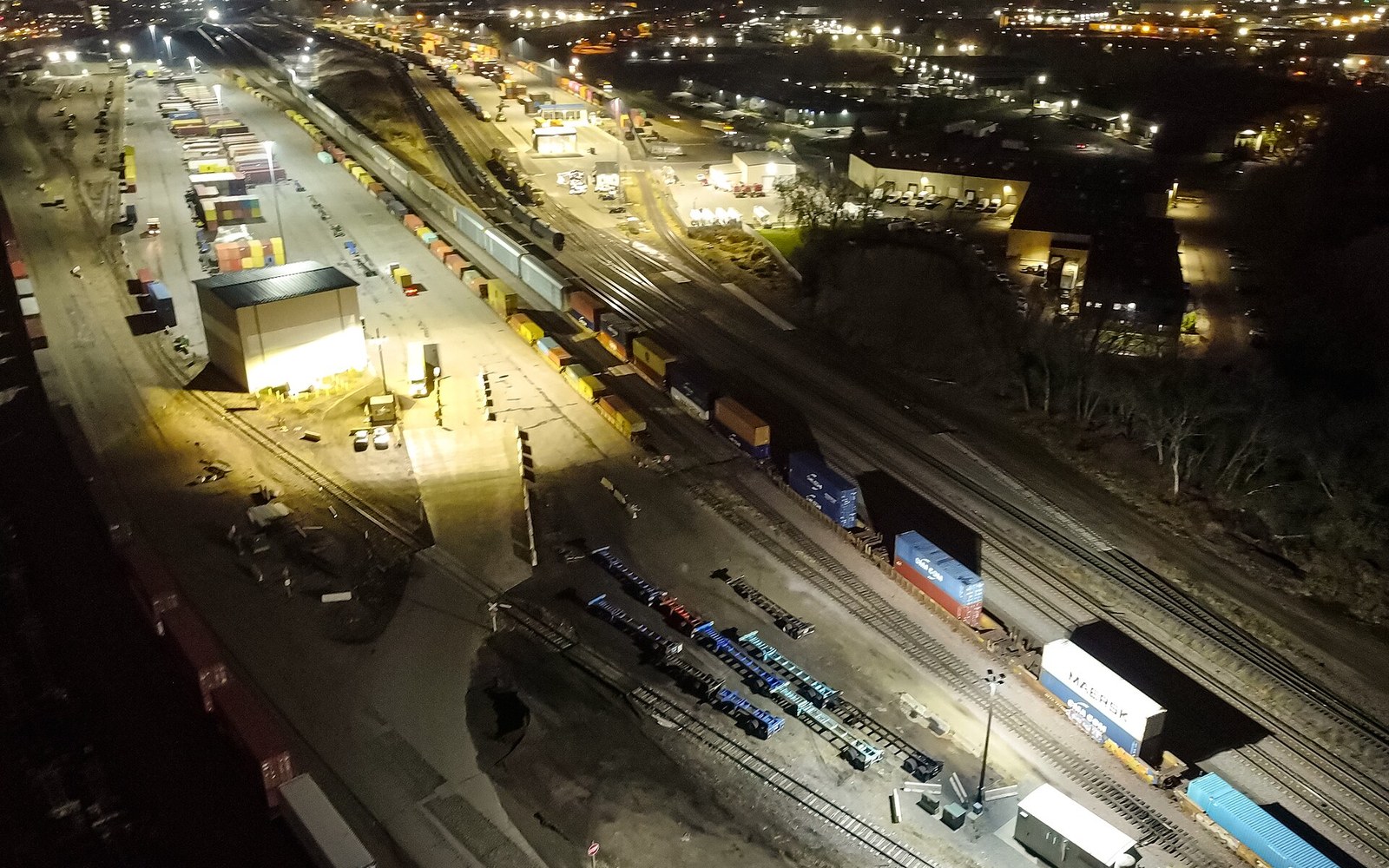
Rows run perpendicular to the quay so one crane can serve several at once. The depth of the stack is the terminal’s real capacity.
Photo: Container terminal in Minneapolis · Wikimedia Commons
The yard itself is a storage problem of considerable complexity. Every box must be reachable in a known number of moves; a box buried four-deep under the wrong boxes costs the terminal time it cannot recover. Rubber-tyred gantry cranes, rail-mounted gantries and automated stacking cranes are all answers to the same question: how do you store the maximum number of TEU — twenty-foot equivalent units, the measure by which terminal capacity is denominated — in the minimum footprint, and retrieve any one of them quickly enough that the ship waiting at the berth does not miss its slot?
The document and the chokepoints
Beneath all the steel and machinery, the paperwork had to change too. The bill of lading in its traditional form described cargo by marks, numbers, and the condition in which it was received: so many bales of cotton, so many cases of machinery, shipped in apparent good order. A container presents a different problem entirely. The carrier receives a sealed box; what is inside is declared by the shipper but not inspected. The bill of lading evolved to reflect that fact — "said to contain" became standard language — and the documentation chain grew to include container manifests, equipment interchange receipts and the electronic data interchange systems that now precede a ship's arrival.
Geography imposed its own constraints on the new system. The Suez Canal and the Panama Canal set draught and beam limits that shaped containership design for decades; the Strait of Malacca imposes its own depth discipline on vessels heading between the Indian Ocean and the South China Sea. As ships grew — and they grew because the economics of containerisation reward scale relentlessly — every chokepoint became a negotiation between what the ship's owners wanted to build and what the world's waterways and terminals could actually accommodate.
Malcom McLean's Ideal X sailed from Newark in April 1956, and the interesting part is the decade of cranes, yards and contracts that followed.
McLean did not invent the metal box or the notion of unitised cargo. What the decade after Newark demonstrated, in cranes commissioned and yards bulldozed and standards argued over in Geneva committee rooms, was that the box was the least of it. The system — interlocking, globally standardised and mutually dependent — was the invention.
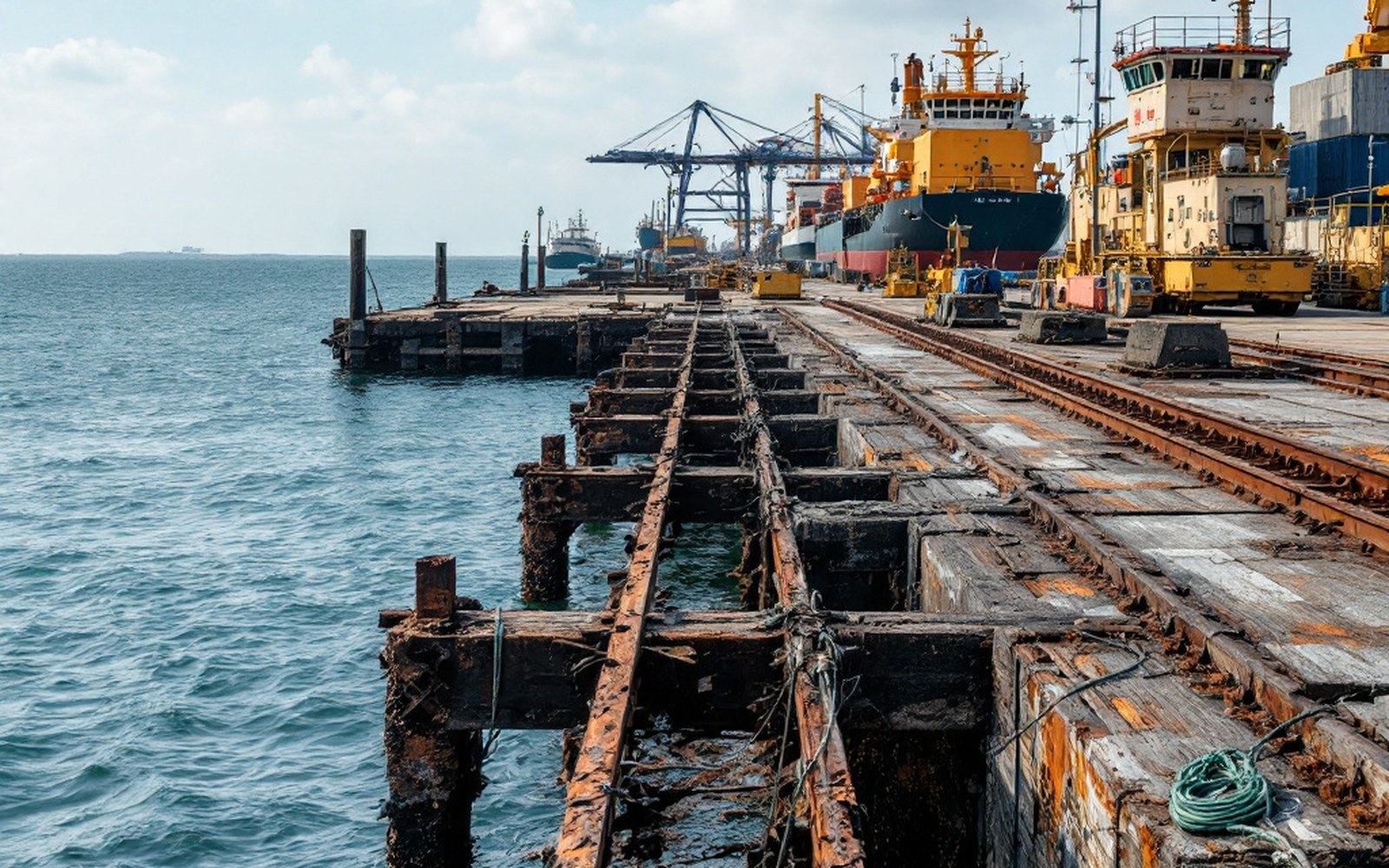
A finger pier has water on three sides and no room behind it. That is the condition that emptied them.
Named in this piece
Malcom McLean
Trucking operator, 1913–2001
Founded McLean Trucking in North Carolina, then bought Pan-Atlantic Steamship, which became Sea-Land Service. The Ideal X sailed from Port Newark under his ownership in April 1956.
Keith Tantlinger
Engineer, 1919–2011
Designed the twistlock and the spreader that grips a box by its corner castings, for Sea-Land. The patents were released so the geometry could become an open standard.
Read next