Everything that had to change around the box
Why the standard was the hard part
Before a box could move the world, every dimension of it had to be agreed by people who had nothing to gain from agreeing.
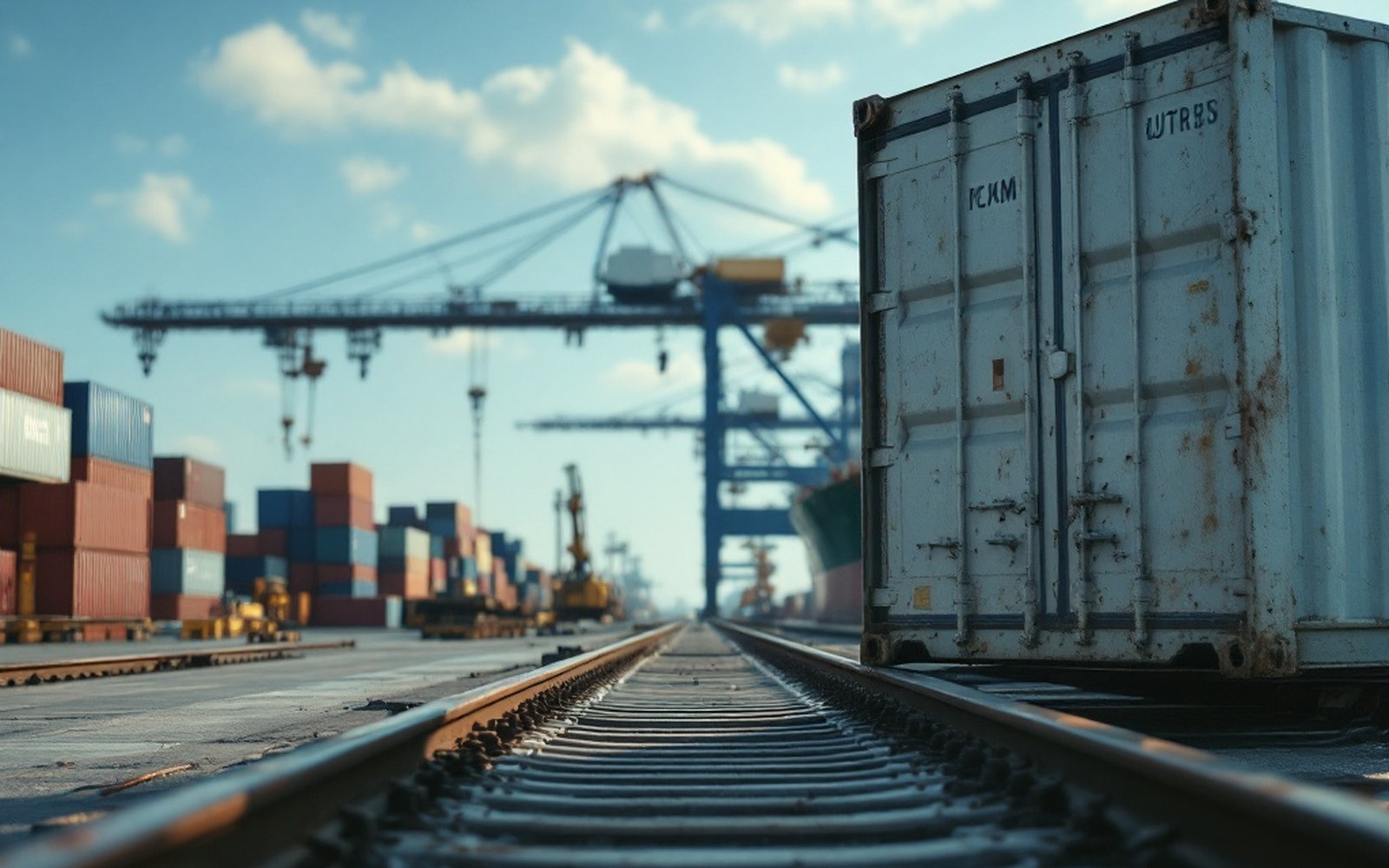
The oval apertures are the standard. A spreader, a twistlock and a chassis pin all address the same casting.
The problem that preceded the crane
Malcom McLean's Ideal X sailed from Newark in April 1956 carrying fifty-eight aluminium trailers on a converted tanker deck. The sailing worked. What it proved, however, was narrower than it is usually remembered: it proved that a shipper could put cargo in a metal box, drive that box to a pier, lift it onto a ship and drive it away at the other end — provided every piece of equipment in that chain belonged to the same company, had been designed together and never encountered a crane, a railcar or a vessel that belonged to anyone else.
That caveat is the whole history of the 1960s. McLean's Sea-Land had its dimensions. Matson Navigation, running boxes between California and Hawaii at roughly the same moment, had different dimensions. Grace Line had its own. The Pan-Atlantic Steamship Corporation had yet another. Each system worked internally; none of them worked with each other. A railcar sized to carry one company's forty-foot box could not hold another's. A crane spreader built to grip one corner casting would miss the next. The shipping companies, the railroads, the ports and the crane manufacturers were all making capital investments that could be stranded by a single rival's different choice of width.
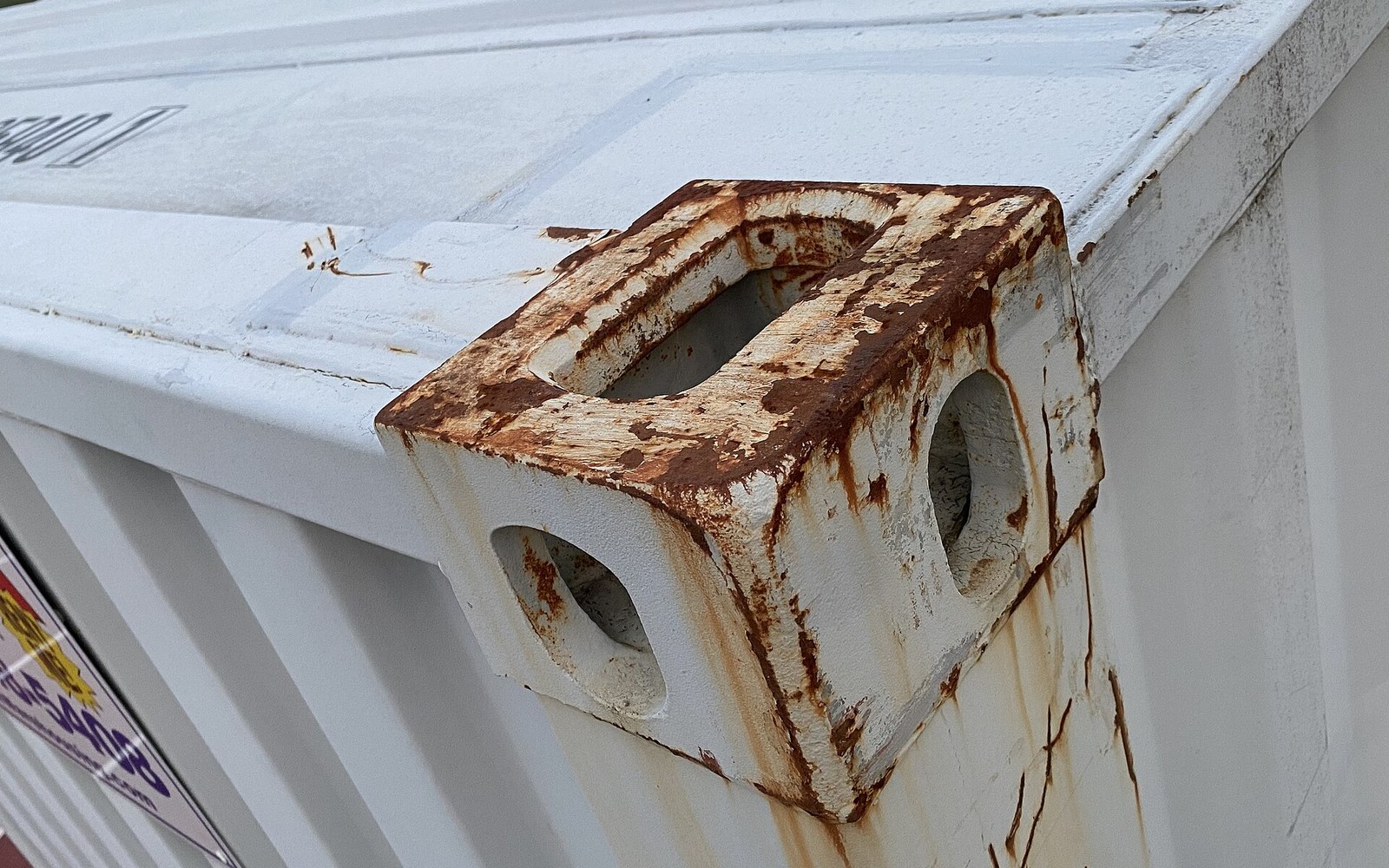
The twistlock drops through the casting aperture and turns a quarter circle. Everything above deck stands on that.
Photo: Arnold Reinhold · Wikimedia Commons
This is what made standardisation so difficult. It was not a technical problem — engineers could specify a corner casting to any tolerance you named. It was a coordination problem among competitors, each of whom had already committed money to a particular answer.
The dimensions that had to be fixed
The critical dimensions were length, width, height and — most precisely — the geometry of the corner casting. Width was settled first and most durably: eight feet, chosen partly because it fit the loading gauge of North American railroads and partly because it was a number several of the early operators had already converged on by accident rather than design. Height was messier; the industry would spend decades arguing over eight feet six inches against nine feet six inches, the latter eventually becoming the high-cube standard now dominant on most trade lanes. Length was the most contentious, because the economic interests of ship operators, railroad companies and road hauliers pointed in genuinely different directions.
Ship operators wanted the longest boxes possible — fewer lifts per ton of cargo. Railroads wanted boxes that would sit in a well-car without overhanging. Road hauliers in the United States wanted lengths that fit within highway regulations, which differed by state. The compromise that emerged gave the world twenty-foot and forty-foot as the canonical lengths, with the twenty-foot unit becoming the basis for the TEU — the twenty-foot equivalent unit that every port, every carrier and every analyst now uses as the basic measure of capacity.
The corner casting is where the standard becomes most precise and most consequential. It is a steel forging at each of a container's eight corners, with oval apertures on three faces. Through those apertures, a twistlock engages from below when the box sits on a chassis or another container; a spreader bar locks from above when a crane lifts it. The entire intermodal system — road, rail, sea and crane — interfaces with the cargo through those eight fittings and those fittings alone. Get the aperture geometry wrong by a few millimetres and the twistlock either fails to engage or cannot release. The casting must also carry the full stacking load of containers above it, which on a large vessel can mean five or six loaded boxes pressing down — weights of forty tonnes and more per stack.
Twenty-four rows of one width. Every guide, spreader and twistlock in the drawing addresses the same 2.438 m module.
Schematic; dimensions after ISO 668.
ISO and the decade of negotiation
The body that eventually fixed these specifications was the International Organization for Standardization, working through its Technical Committee 104. The process began in earnest in the early 1960s and consumed most of the decade. The United States government, through the Maritime Administration, pushed hard for rapid agreement because the military had a direct interest: the Vietnam War created an urgent need to move standardised cargo containers between commercial ships and military logistics chains, and incompatible boxes were an operational problem, not merely a commercial one.
The key ISO standards that emerged — principally ISO 668, covering the series of freight containers by external dimensions, and ISO 1161, covering corner fittings — did not simply describe boxes that already existed. They made choices. ISO 1161, first published in 1973 after years of revision, specified the corner casting aperture in enough detail that any manufacturer, anywhere, could produce a fitting that any spreader, anywhere, could grip. That is a more demanding achievement than it sounds: the tolerance for the oval hole in the top casting face, and the radius of its edges, had to be tight enough for mechanical reliability and loose enough for manufacturing variation across dozens of countries. The document that fixed those numbers is what made the gantry crane a universal tool rather than a proprietary one.
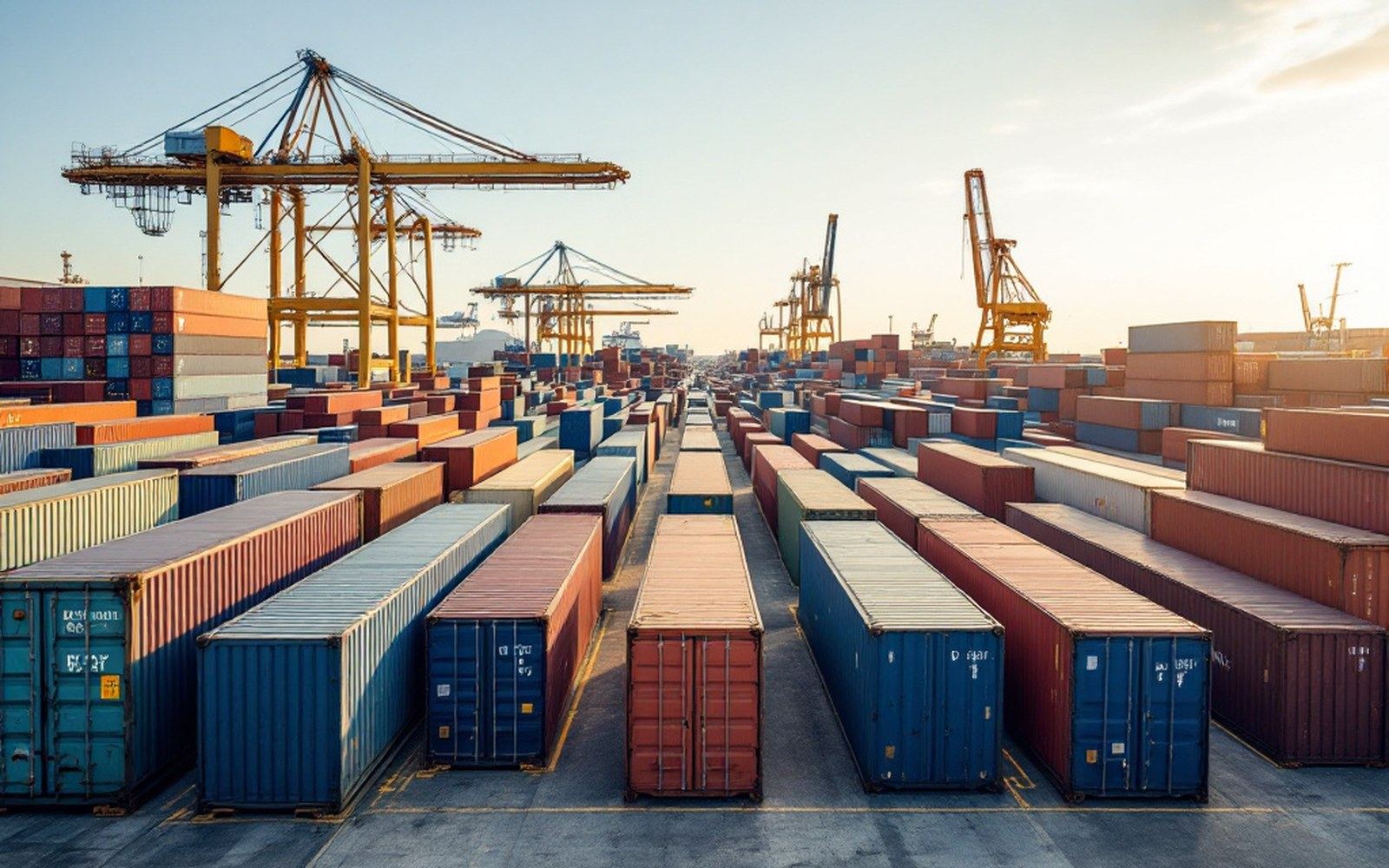
Twenty and forty foot boxes in the same rows. Capacity is counted in the shorter one, which is why the figures rarely match what you can see.
What the ISO process could not fully resolve was the political economy of existing investment. Operators who had built fleets around thirty-five-foot boxes, or twenty-four-foot boxes, did not simply scrap them. The transition period saw mixed fleets, improvised adaptors and considerable friction — all of which showed up in port handling costs. Standardisation reduced that friction progressively rather than instantly, which is why the productivity gains of containerisation arrived over a decade rather than overnight.
The sequence of agreement
- 1956Ideal X sails; proves the single-operator system, not an open standard
- Early 1960sISO Technical Committee 104 begins work on container dimensions
- Mid-1960sUS Maritime Administration presses for rapid agreement; Vietnam War logistics a direct driver
- 1973ISO 1161 (corner fittings) published in its foundational form
- Ongoinghigh-cube height (9ft 6in) gradually overtakes 8ft 6in as trade-lane dominant
What the agreement made possible
Once the corner casting geometry was fixed and the external dimensions were published, the downstream consequences were enormous and compounding. A shipyard in South Korea building a vessel for a Danish carrier could design cell guides — the vertical rails inside a ship's hold that locate containers — to the same specification as the chassis being manufactured in Belgium for a German haulier, and the spreader being assembled in Finland for a crane destined for Rotterdam. Nobody needed to negotiate with anybody else, because the negotiation had already happened inside a standards committee.
The same logic extended to draught and beam. As container ships grew — eventually past twenty thousand TEU — the limiting factors became the Suez Canal's depth and the beam constraints of the Panama Canal's locks, not any property of the box itself. The box had been fixed; the world's geography became the variable. The fact that a constraint this geophysical is what eventually bounded ship size is itself a tribute to how completely the standardisation problem was solved. Engineers optimised everything else until the planet said stop.
Corner castings and dimensions had to be agreed internationally before a box loaded in one country could be lifted in another.
The bill of lading — the document that travels with the cargo and serves simultaneously as receipt, contract and title — also simplified around the standard. A box is a box: it has a number, a seal, a weight, and its contents are its shipper's business. The document does not need to describe how the cargo is packed inside, because the carrier is not responsible for what it cannot inspect. Standardisation of the physical object enabled standardisation of the paperwork, which in turn enabled the automation of both.
The corner casting is about sixty millimetres deep and weighs a few kilograms. Multiplied by eight corners and several hundred million containers, it is one of the most consequential small forgings in industrial history — not because of what it is, but because of what it took to agree on it.

Above deck the stack is held by hand — a rod from the box’s upper casting to a deck fitting, tensioned with a turnbuckle.
Named in this piece
Read next