The crane that had to be invented
Elizabeth, and the piers that emptied
How deep water and flat land ended the old finger piers — and why the traffic moved across the harbour before it crossed the ocean.
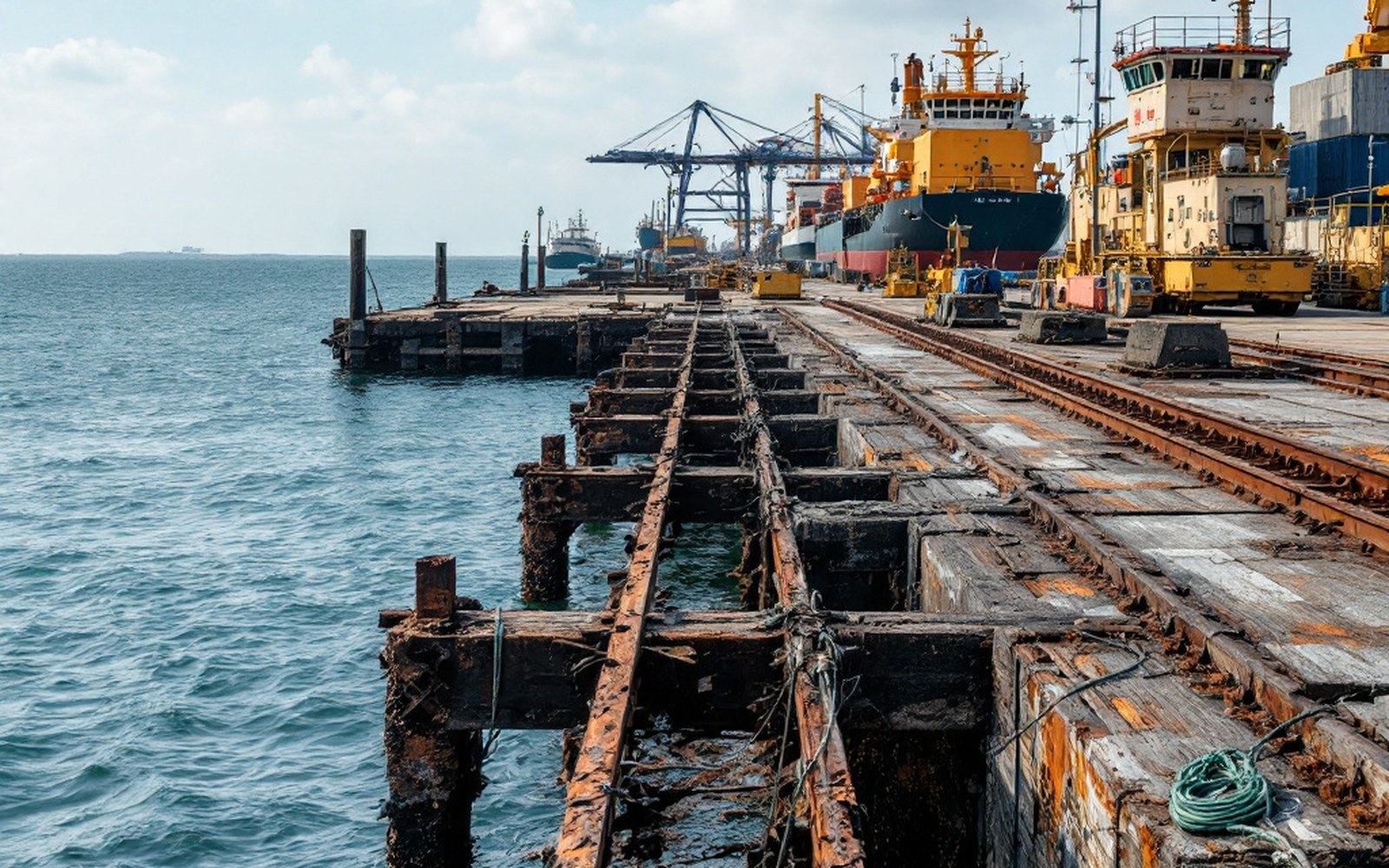
A finger pier has water on three sides and no room behind it. That is the condition that emptied them.
The harbour that could not accommodate what it had invented
The timing is almost cruel in its neatness. Malcom McLean's Ideal X sailed from Newark in April 1956, carrying fifty-eight trailer bodies on a converted tanker deck, and the container age began. The port it sailed from was not, at that moment, on Manhattan's side of the Upper Bay. It was in New Jersey — across the water, on flat industrial ground beside the Passaic and Hackensack rivers. That choice was not sentimental. It was logistical, and it prefigured everything that followed.
Manhattan's piers, at the time of that sailing, were among the busiest cargo-handling facilities on earth. They were also finger piers — long, narrow sheds jutting into the Hudson, designed around the rhythms of break-bulk shipping. A ship tied up alongside; gangs of longshoremen moved down into the hold; goods came out piece by piece, were sorted under the shed roof, and were trucked away through streets that were already, by mid-century, inadequate. The system was labour-intensive by design, because labour was the machine. A container terminal requires something entirely different.
What the box demands that the old piers could not give
A container terminal is, in its essentials, a materials-handling problem at a very large scale. The box arrives by ship, must be lifted from the vessel, set down in a location that can be found again, and moved — to rail, to truck, or back onto another ship — within a window measured in days. Every one of those steps requires space, and the space required is not a shed with a roof. It is open, flat, paved ground, often tens of hectares of it, arranged to let straddle carriers or rubber-tyred gantry cranes travel the rows without obstruction.
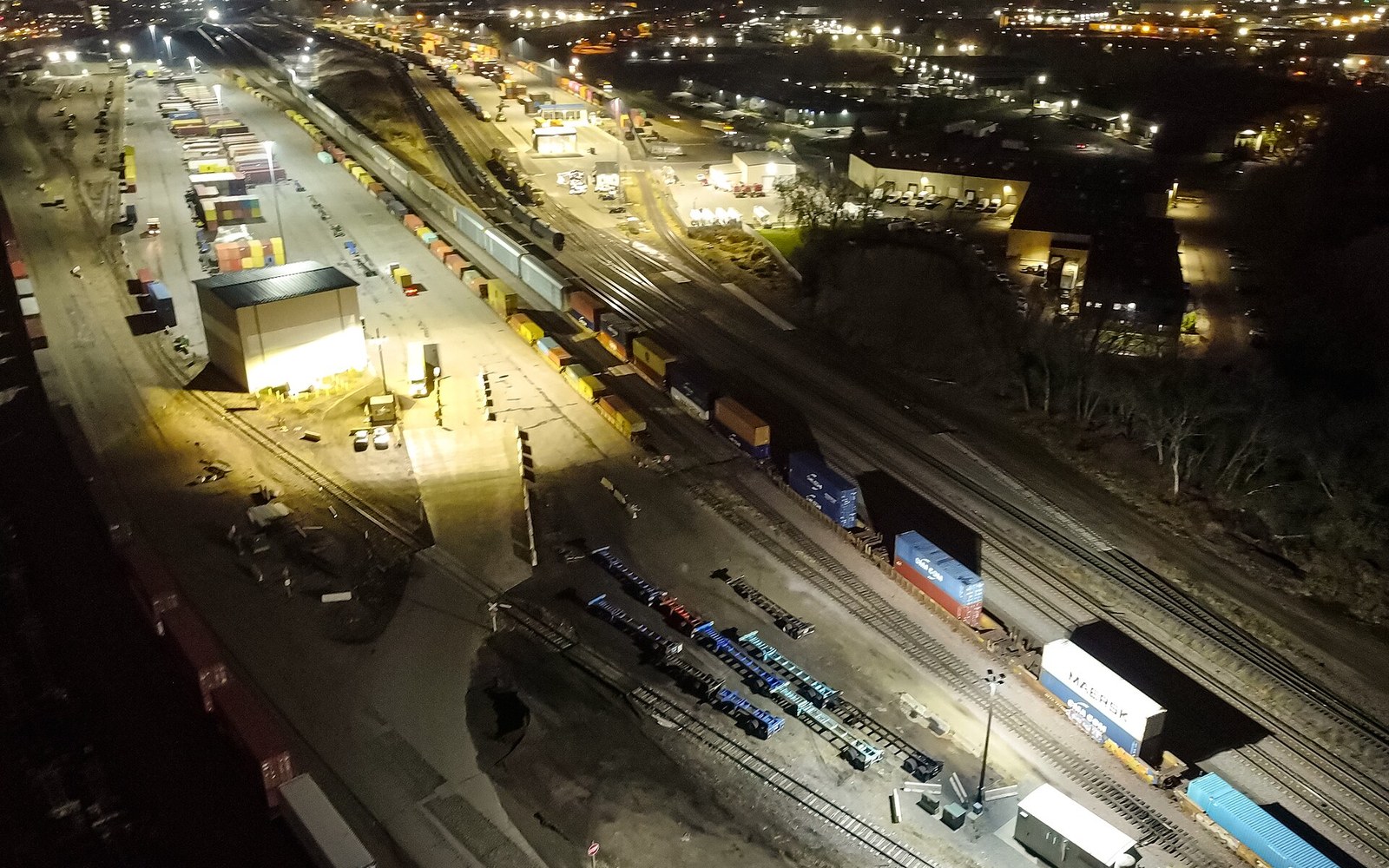
Rows run perpendicular to the quay so one crane can serve several at once. The depth of the stack is the terminal’s real capacity.
Photo: Container terminal in Minneapolis · Wikimedia Commons
The gantry cranes that do the ship-to-shore lift are themselves the first constraint. A ship-to-shore gantry — the tall, rail-mounted structure that straddles the quayside and reaches out over the vessel's beam — needs a long, straight, unobstructed quay face. The longer the vessel, the more cranes must work it simultaneously to turn it in an acceptable time. Finger piers cannot provide this: they have two sides, both narrow, with water on three edges and a street behind. The mathematics of the gantry and the container vessel simply do not fit the geometry of a nineteenth-century pier.
Draught is the second constraint, and in some respects the harder one. A fully loaded container ship sits deep in the water, and that draught has grown with every generation of vessel. The Hudson off Manhattan is dredged, but the approach channels, the pier faces and the swing room needed for a vessel of any modern length were never designed for ships of this size. The New Jersey side of the harbour offered something the Manhattan waterfront never could: the possibility of dredging to the required depth without tearing up a working city, and the possibility of building — not adapting, but building from bare ground — a terminal configured for the box from the first paving stone.
Elizabeth, and the geometry of what replaced the piers
Port Newark and the adjacent Port Elizabeth terminal, which began containerised operations in the early 1960s, are the direct institutional consequence of that geometry. Port Elizabeth in particular — opened by the Port Authority of New York and New Jersey, a bi-state agency created in 1921 — became one of the first purpose-built container terminals in the world. What it had, and what the Manhattan finger piers could never have had, was approximately eight hundred acres of flat ground, direct rail access, and a berth arrangement that could be extended and deepened as vessels grew.
The ISO corner casting and the standardised dimensions that made the whole system work were still being contested internationally during those early years, which means the terminal designers at Elizabeth were, in a sense, building for a standard that was still being written. What they understood from the start was the spatial requirement — that a box that could be stacked needed not a covered shed but a yard, that the spreader bar of a gantry crane needed clearance and repeatability, and that the truck and rail connections had to be immediate and direct, not mediated by the narrow streets of lower Manhattan.
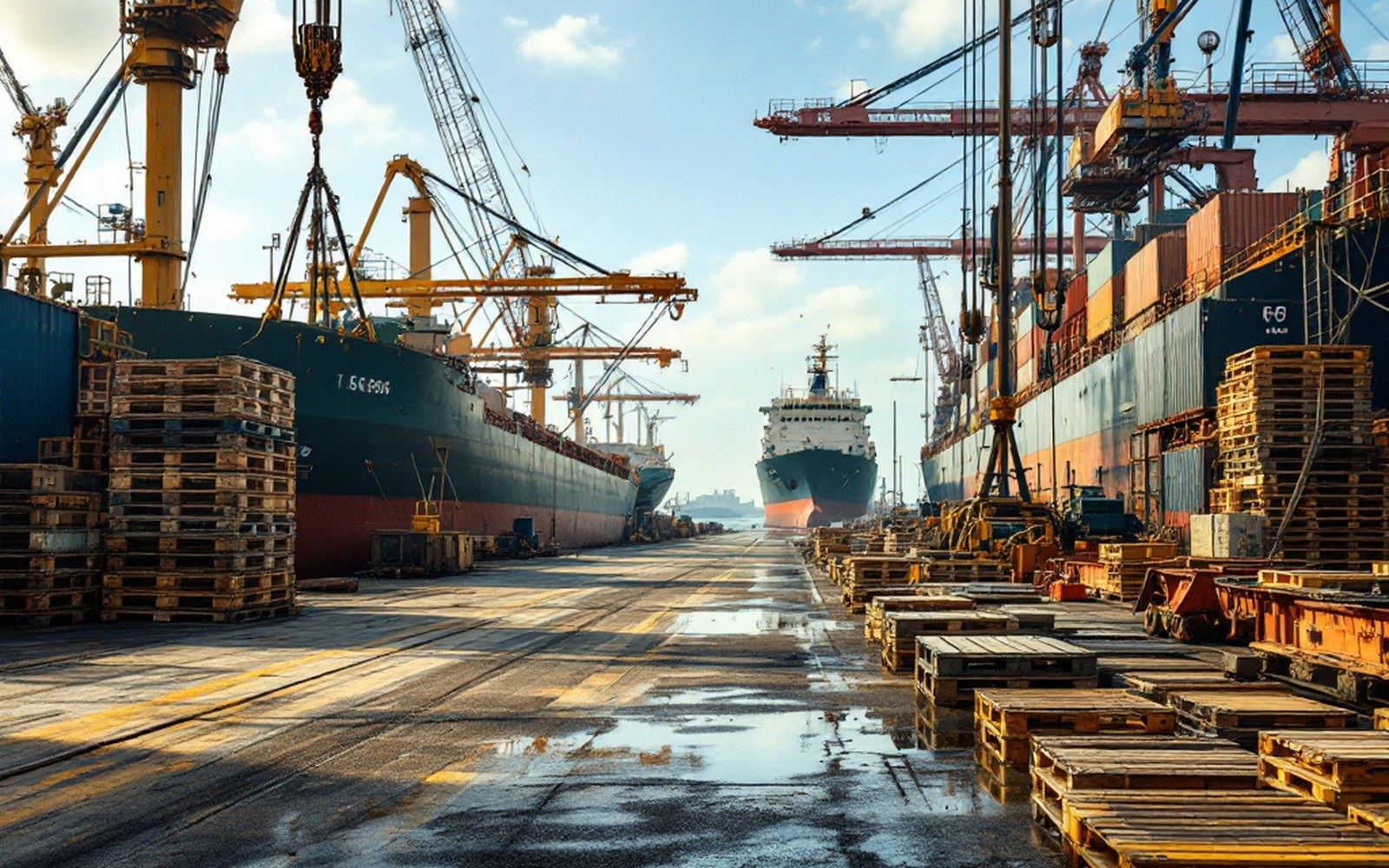
Break-bulk needed pallets, slings and a shed behind the berth. The container needed none of them and a great deal of flat land instead.
The traffic left the old piers rapidly, and not quietly. The change in dock employment that mechanisation brought was sharp and concentrated, felt most severely in the communities around the Manhattan and Brooklyn waterfront that had organised their working lives around the rhythms of break-bulk. Within roughly a decade of the Ideal X sailing, the West Side piers were in visible decline. Some would later be repurposed — parks, ferry terminals, cultural venues — but as cargo-handling facilities, they were finished. The economics of the container had made them obsolete before the container was even properly standardised.
The principle that generalised everywhere
Elizabeth is the American instance of a principle that repeated itself at every major port that wanted to handle containerised cargo. Rotterdam built Maasvlakte on reclaimed land in the North Sea — not because Rotterdam's existing port was inadequate in character, but because the space and depth requirements of modern terminal operation could not be retrofitted onto a historic waterfront without destroying it. Felixstowe displaced London. Tanjung Pelepas challenged Singapore. In each case, the old port city found its waterfront traffic migrating to a purpose-built facility that sat where the water was deep enough and the land was flat enough and the trucks could get in without passing through a medieval street plan.
Timeline
- April 1956Ideal X sails from Newark; fifty-eight trailer bodies, converted tanker deck
- Early 1960sPort Elizabeth opens as one of the world's first purpose-built container terminals
- Within roughly a decade of 1956Manhattan and Brooklyn finger piers enter visible cargo decline
- Maasvlakte (Rotterdam) and Felixstowe (UK) follow the same spatial logic across subsequent decades
The Strait of Malacca, which constrains vessel draught as meaningfully as any port's approach channel, is part of the same story told at oceanic scale: depth determines route, and route determines where a terminal must sit to be useful. The chokepoints of the system are not only geographical. They are, just as often, the distance between where a city's waterfront happens to be and where a container terminal actually needs to be built.
The finger piers of Manhattan did not fail because they were managed badly or because the traffic was taken from them by force. They failed because the box that crossed the Atlantic in growing numbers needed something they were constitutionally incapable of providing: a long straight quay, a deep approach, and behind it, open land — as far as the cranes could see.
Container terminals needed deep water and enormous flat land, which is why the traffic left the old finger piers.
Named in this piece
Read next